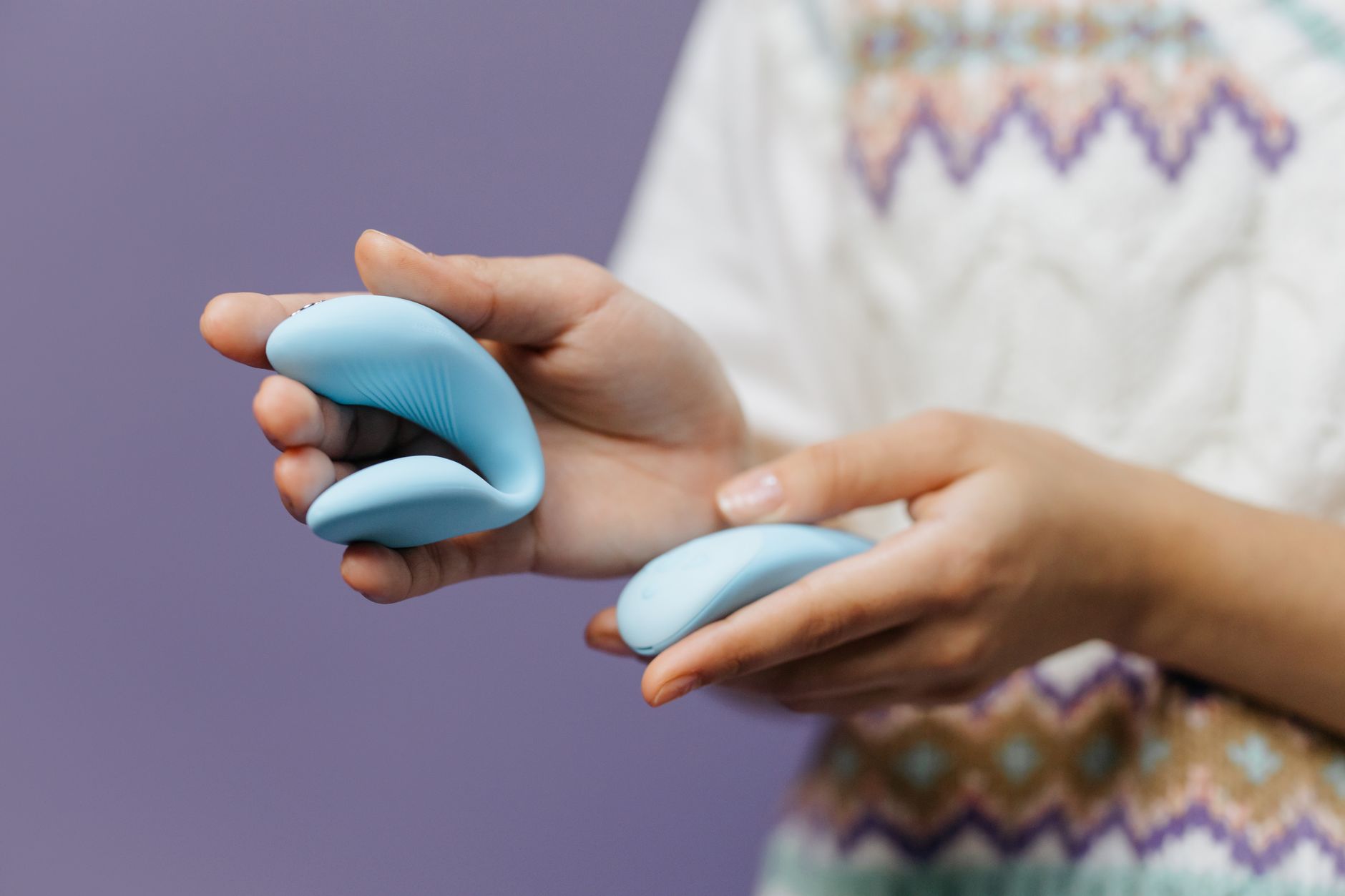
Let's talk about the vibrator you're actually avoiding
You bought a lemon clitoral vibrator, and it's sitting in your nightstand because the moment you turn it on, it feels like holding a jackhammer. You're not broken. Your equipment isn't wrong. You've just been handed a powerful tool with no instruction manual on how to use it at half power.
Here's what I see in my practice all the time: people assume vibrator intensity is binary. It's either on or off, full blast or nothing. That belief costs them months of genuinely good experiences they could be having right now.
The pattern intensity isn't just about speed
When we talk about controlling sensation intensity with a lemon vibrator, most people think we mean turning down the speed. That's one part of it. But intensity lives in at least four places, and understanding all four changes everything.
First, there's actual vibration speed. The Lem vibrator has multiple patterns and intensity levels, and starting at pattern 1 or 2 is genuinely where most people should begin. Not out of shame. Out of strategy. Your nervous system needs time to recognize what's happening and build arousal gradually. Jumping straight to level 5 is like turning the shower dial all the way to hot without letting it warm up first.
Second, there's pressure. You don't have to press the vibrator hard against your body. Light contact, almost hovering, creates a totally different sensation than bearing down. I recommend starting with barely-there pressure and only increasing if you want to.
Third, there's surface contact. A lemon sucker-style vibrator like the Lem creates suction rather than direct vibration, which means you can vary how much of the suction cup is in contact with your skin. Partial contact feels lighter; full seal feels stronger. Neither is wrong.
Fourth, there's timing. A pattern that feels too intense for 20 minutes straight might feel perfect for 30 seconds as a crescendo. Pacing, duration, and intervals all modify how your body interprets the sensation.
Starting low and actually staying there
Honestly, most instructions say "start on the lowest setting," and people nod and immediately crank it higher because "nothing's happening." Let me be direct: something is happening. You're just not used to listening for it yet.
When you first turn on a lemon vibrator at pattern 1, your body needs 30 to 60 seconds to even register what's occurring. Your nervous system is checking: Is this pleasant? Is it safe? Do I want more? If you interrupt that process by escalating after 5 seconds, you never give your arousal a real chance to build.
Set a timer if you need to. Spend two full minutes at pattern 1. Notice what you notice. Does it feel too faint? Probably not. Does it feel oddly soothing? Likely. Does it create even a slight tingle or warmth? That's your signal to stay a little longer.
After two minutes at pattern 1, then move to pattern 2. Wait another minute or two. The goal isn't to reach maximum intensity. The goal is to find the sweet spot where you're genuinely aroused and the sensation feels genuinely good. For many people, that's pattern 2 or 3, not 5.
The role of lubrication in how you feel sensation
If you're using a lemon vibrator with inadequate lubrication, intensity will always feel harsh, even on low settings. Water-based lubricant doesn't just reduce friction. It changes the entire tactile experience, making lower intensities feel satisfying instead of frustrating.
Apply lube generously to both the toy and your body. This serves two purposes. First, it actually makes lower intensity feel sufficient because the stimulation travels better through skin when there's a thin lubricated layer. Second, it protects tissue, which means you can comfortably explore sensation without worry.
If you find yourself wanting to turn the intensity up but knowing that feels wrong for your body, adding more lube is often the real answer, not reaching for a stronger setting. It's a small shift that completely changes how sensation registers.
Building a personal intensity roadmap
You deserve to know exactly what your pleasure looks like at every intensity level. This isn't overcomplication. It's expertise in yourself.
Spend one solo session deliberately exploring each pattern and intensity level, spending just 30 to 60 seconds on each one. Don't orgasm yet. Just notice. What feels ticklish? What feels tingly? What feels warm and spreading? What actually makes your breath change? What makes you want more?
Write it down if you're the type who forgets. "Pattern 1 feels like background buzz. Pattern 2 feels like a building warmth. Pattern 3 feels like I could almost get there. Pattern 4 feels too much." That's valuable data. That's your roadmap.
Some people will find that pattern 1 is their orgasm-level intensity. Some will peak at pattern 3 and feel pain at pattern 4. Some will love the rhythmic patterns over steady speed. None of that is abnormal. It's just information.
Once you know your map, you also know how to talk about it with a partner. "I really enjoy pattern 2 for the first few minutes, then pattern 3 as I'm building," is way more useful than "not too strong" or "do whatever feels right." It removes guesswork and puts you in control.
When sensation control matters most with a partner
If you're using a lemon vibrator with a partner, intensity control becomes even more important because you're managing two people's comfort, expectations, and timing.
Let your partner know in advance what intensity you actually enjoy. Show them, if possible. Have them hold the toy while you guide the pressure and placement. This accomplishes two things: they learn exactly what makes you respond, and you stay in control of the sensation the whole time.
Many partners assume they should crank vibrators to maximum because "more intense equals more pleasure." That's rarely true. A partner using pattern 2 while you guide placement and breathing is usually far more effective than pattern 5 while you're tensing up and wishing it would end.
If they want to surprise you or try something new, ask them to start low. You can always go higher together. You can't easily come back down from too much.
The anxiety that usually hides inside intensity
Sometimes what feels like "too intense" is actually anxiety about the sensation, about being seen, about making noise, or about whether you "should" be enjoying this. Intensity control gives your nervous system permission to slow down and check in.
If you notice yourself reaching for lower intensity settings when technically the higher ones worked before, pause and ask: Am I physically overwhelmed, or am I psychologically hesitant right now? If it's the latter, staying at a lower, more comfortable intensity actually helps your brain relax and your arousal flow. Forcing yourself through discomfort doesn't build confidence. It builds resentment.
Read about how to use a lemon vibrator when anxiety affects arousal and connection if you suspect anxiety is playing a role. It's a different problem than intensity preference, and it deserves a different solution.
Customizing sensation with the Lem and other lemon vibrators
The Lem clitoral vibrator's suction-based design means intensity control works slightly differently than with traditional buzzy vibrators. You're not just managing vibration speed. You're managing suction strength and pattern combinations.
Start with the lightest suction pattern. Notice how it feels. Increase gradually. For many people, the mid-range suction patterns are more satisfying than maximum because they create a sustained sensation rather than an overwhelming one.
If you're interested in exploring different vibration styles altogether, some people find that different lemon vibrators feel better when you need faster arousal because various designs deliver sensation differently. But before you buy another toy, make sure you've genuinely explored the full intensity range of the one you have.
FAQ: Your intensity control questions answered
Why does pattern 1 feel almost too subtle?
It doesn't feel subtle once your body recognizes it. Give it 60 to 90 seconds of attention. Your arousal system is slow to wake up in the beginning, especially if you're used to higher intensities. You're training your nerve endings to respond to gentler input, and that takes a moment.
Can I hurt myself using a lemon vibrator on low intensity?
Not really. Low intensity is physically safe. What matters is lubrication, duration, and whether you're experiencing actual pain versus just mild discomfort. If something genuinely hurts, stop. If it feels uncomfortable but not painful, that's usually just unfamiliarity, and it passes.
What if my partner wants it stronger and I want it lighter?
Compromise on pattern and intensity, not on your actual comfort. Find a middle setting you both can enjoy for foreplay, then switch to your preferred intensity when it's your turn to focus on you. You're not obligated to enjoy the same sensation level. Most couples don't.
Does using lower intensity mean I'll have a weaker orgasm?
Often the opposite. Orgasms built slowly, with attention and without rushing, tend to feel more intense than orgasms chased at maximum vibration. Slower arousal usually means more blood flow, more engagement, and a stronger release. Quality beats speed almost every time.
Is it okay to always use the same low-intensity pattern?
Completely fine. You're not supposed to graduate to higher intensities like it's a achievement. If pattern 2 feels perfect and you orgasm reliably, that's your sweet spot. Stick with it. Pleasure isn't a performance ladder.
What if intensity control still doesn't help and everything still feels uncomfortable?
Then the issue is probably not intensity but something else. Lubrication thickness, tissue sensitivity, pelvic floor tension, or arousal state might be the actual culprit. If you've genuinely explored the lowest settings and nothing works, it's worth discussing with a healthcare provider who specializes in sexual health.
The real control is yours
A lemon vibrator is a tool you're supposed to enjoy, not survive. Intensity control exists so you can customize sensation to match your nervous system, your body, your mood, and your preferences on any given day. That power to adjust, to slow down, to explore at your own pace, is where the real pleasure lives. Start low. Stay curious. Let your body teach you what it actually wants.