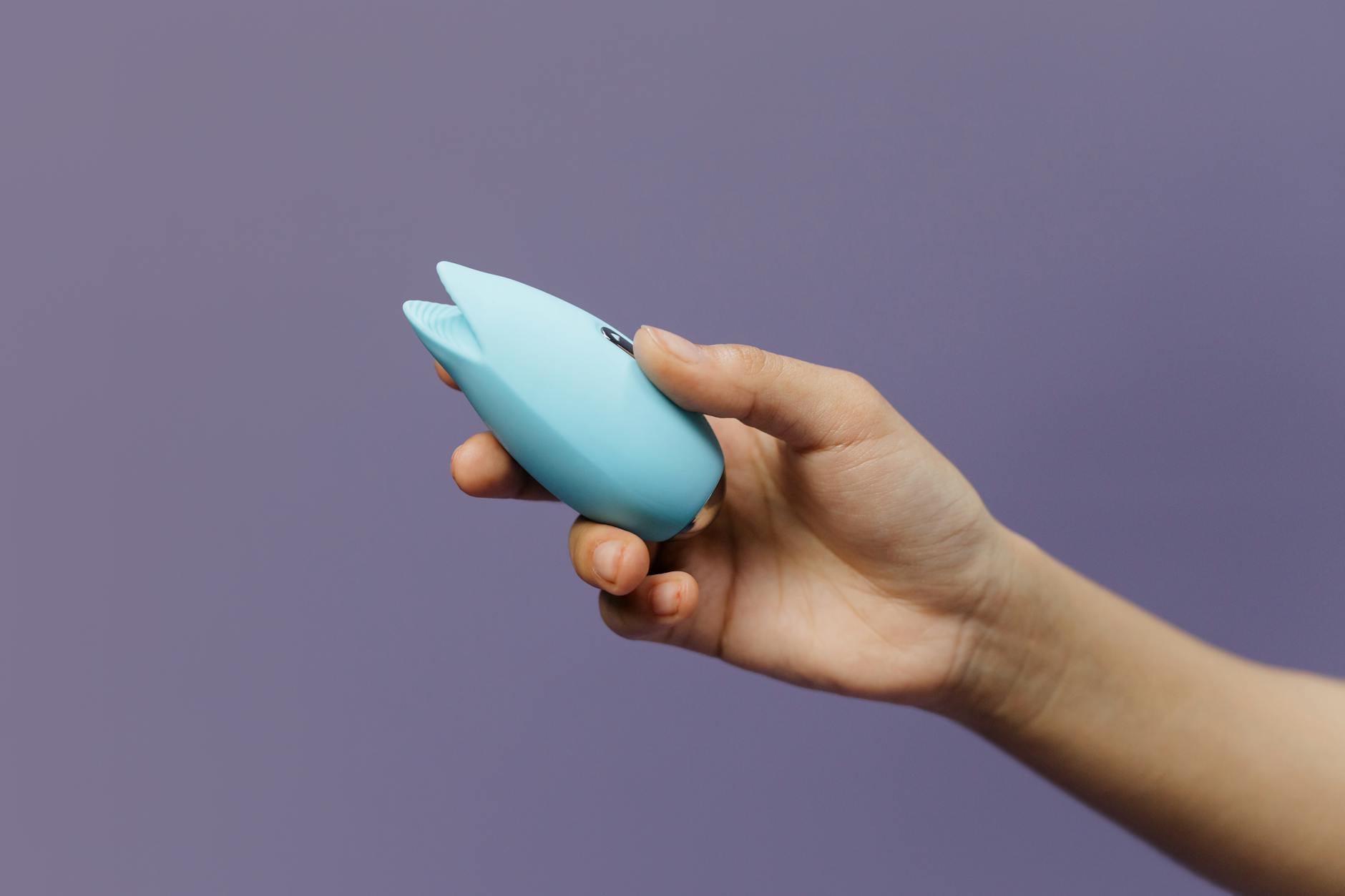
The trap you're probably in right now
Let's be honest. You're using a vibrator, and somewhere in your body lives this quiet clock. Five minutes in, you're thinking "How much longer?" Ten minutes, you're wondering if something's wrong. Fifteen minutes, and now you're just performing the orgasm instead of feeling it.
Here's the thing: that clock wasn't there before you started worrying about it. Performance pressure is one of the fastest ways to kill arousal, and it's especially sneaky with vibrators because they're so effective at building sensation that you think if you're not coming by minute eight, the tool isn't working. It is. Your nervous system just got hijacked.
Why the pressure exists (and it's not your fault)
Partner sex has timelines. Someone's body is involved, someone's attention span matters, logistics exist. You've spent years calibrating your pleasure around someone else's rhythm, so when you're finally alone with a lemon vibrator, your brain still has a stopwatch running.
Or maybe the pressure comes from a partner. "Why does it take so long?" they've asked. Or you've felt their impatience shift their energy. That gets internalized fast. Your body learns: slow arousal is a problem I need to fix.
Then there's the internet, which told you that clitoral vibrators are supposed to give you orgasms in minutes. Some do. Some days. Not every time. Not with this specific neural pathway. Not when you're distracted or stressed or just having a slower day.
What slow orgasms actually signal
First, let's break the assumption that slow means broken. A 20-minute arousal curve isn't a malfunction. It's just how some nervous systems are wired, especially under stress or in certain phases of your cycle.
Second, longer arousal often means deeper orgasms. The longer the buildup, the more tissue engorgement, the more neural priming. You're not losing anything by taking time. You're gaining it.
Third, when you're not performing for an audience (even an imaginary one), pleasure changes. It gets quieter. Less pyrotechnic, more textured. Many people mistake this for weakness. It's the opposite.
How to reset the clock
Start by naming the pressure. Before you pick up the lemon vibrator, write down where the clock comes from. Partner impatience? Your own productivity mindset bleeding into sex? Something a therapist said? A comparison to someone else's experience? Name it so your brain stops running it in the background.
Set an actual time boundary. Grab a timer and set it for 45 minutes. Tell yourself: "I have 45 minutes, and zero of it is wasted. If I orgasm in five minutes, amazing. If not, I'm still here, still exploring, still getting data about my body." The paradox is that removing the pressure to finish fast often makes orgasms arrive faster. Anxiety is the brake.
Use the lowest intensity setting. Most people jump straight to patterns 3 or 4 on their lemon clitoral vibrator. Try pattern 1 for 10 minutes. Not because you need to torture yourself with gentleness, but because low intensity requires you to stay present. High intensity can sometimes let your brain zone out into goal-focused mode.
Build anticipation instead of chasing it. Spend the first 5-10 minutes just touching your body. Not the clitoris yet. Neck, breasts, thighs, the spaces between your ribs. Then introduce the vibrator. The longer your nervous system has to ramp up, the less surprise pressure there is when you finally arrive.
The conversation with partners (if there is one)
If the pressure is coming from someone sharing your bed, this conversation needs to happen outside of sex. Not before sex. Not during. Outside of it entirely, when no one's aroused and no one's vulnerable.
What you're asking for isn't "patience." That word makes it sound like you're a problem to be tolerated. What you're actually saying is: "My arousal has a rhythm that serves us both better when it's unhurried. Quick orgasms sometimes feel like sprints. I want to show you what I'm capable of when I'm not watching the clock."
Then show them. Let them watch you use a lemon vibrator without performing. Most partners who've expressed impatience about timing have never actually seen unhurried pleasure. It's different. It's magnetic. It changes the whole dynamic.
When slow becomes a new kind of pressure
Weird plot twist: some people internalize the opposite instruction. "Don't rush" becomes "You should be able to take 30 minutes." Now the pressure just inverted. If you finish in eight minutes, shame creeps in. That's not better.
The point isn't a specific timeline. The point is your own timeline. Which might be five minutes one day and 35 the next. Both are fine. Both are real. Both count.
Technical adjustments that help the nervous system settle
If you're using a vibrator like the Lem and anxiety is running high, try these tweaks.
Lower the vibration frequency. Start at the quietest pattern. The Lem's whisper-quiet design helps because loud vibration can feel like a time pressure in itself. Soft rumble gives your nervous system room to build arousal without feeling urgent.
Switch patterns mid-session. Don't stay locked on one setting. Every 3-5 minutes, shift to a new pattern. This keeps your brain from zoning out or predicting what's coming, which paradoxically makes the experience feel less performative. Your attention stays in real time.
Use lubrication. Performance anxiety makes the pelvic floor tense. Tension changes how sensation registers. Water-based lube helps tissue glide instead of resist, which means you need less intensity and more can feel like more. Friction becomes comfort. That shift alone can change the whole energy.
Change your position. If you're lying on your back in the dark staring at the ceiling, your brain has space to spiral into the clock. Try a different position. Sit up. Use a pillow under your hips. The novelty of physical positioning resets the script your nervous system is running.
The reframe that actually works
You're not trying to have an orgasm. You're trying to have pleasure. Those are different targets. Orgasm is a possible outcome of sustained pleasure. Pleasure is the point.
When you stop measuring success by arrival time and start measuring it by whether your nervous system felt safe enough to be present, everything shifts. The vibrator becomes a tool for exploration, not a race car.
Take the pressure off the finish line and watch what happens to the journey.
FAQ
How long should it take to orgasm with a clitoral vibrator?
There's no "should." For some people, 2-3 minutes. For others, 15-25. Both are normal. Timeline depends on stress levels, where you are in your cycle, medication, arousal history, and how relaxed your nervous system feels. If you're anxious about time, add 5-10 minutes automatically. Pressure makes everything slower, not faster.
Is it normal to not orgasm even with a vibrator?
Completely normal. Not every session results in orgasm, and that's not failure. Sometimes your body isn't ready. Sometimes your nervous system is elsewhere. Sometimes an orgasm builds and plateaus without tipping over. All of these are valid. A vibrator is a tool for sensation and pleasure, not a guarantee of climax. If you're never orgasming across multiple sessions, a therapist or sex counselor can help identify whether it's anxiety, medication effects, or something else.
Can lemon clitoral vibrators actually cause numbness if I use them too fast?
High-intensity stimulation for extended periods can desensitize nerve endings temporarily, yes. But that's usually a sign you need a break, not that the tool is broken. If you're using a lemon vibrator on high intensity for 20+ minutes without variation, switch it down. Vary patterns. Build in pauses. Your sensitivity will rebound quickly. Slower, varied stimulation keeps sensation sharp and pleasure deeper.
What if my partner thinks I'm taking too long?
This needs a separate conversation, ideally with a couples therapist who specializes in sexual dynamics. Performance pressure from a partner is a relationship pattern, not a body problem. Your arousal timeline is not negotiable or wrong. What's negotiable is how you both approach the disconnect. If your partner can't support your pleasure without measuring it, that's a bigger conversation about what partnership means to you both.
How do I stop thinking about the clock during solo sex?
Put your phone in another room. Set a timer if you need to. But the real trick is redirecting your attention every time the clock thought pops up. When you notice "How long has it been?", gently ask "What does my body feel like right now?" The refocus from time to sensation takes practice, but it works. Meditation apps or breath work before using a vibrator can also anchor you in the present.
Is there a "right" way to use a lemon vibrator to avoid performance pressure?
Yes. Start with no agenda. No target orgasm. No timeline. Just curiosity. Where does the sensation land? How does it change across your vulva? What patterns feel different? Treat the first 5-10 sessions like exploration, not performance. Once your nervous system realizes there's no finish line, arousal stops being a race. That's when the real pleasure shows up.