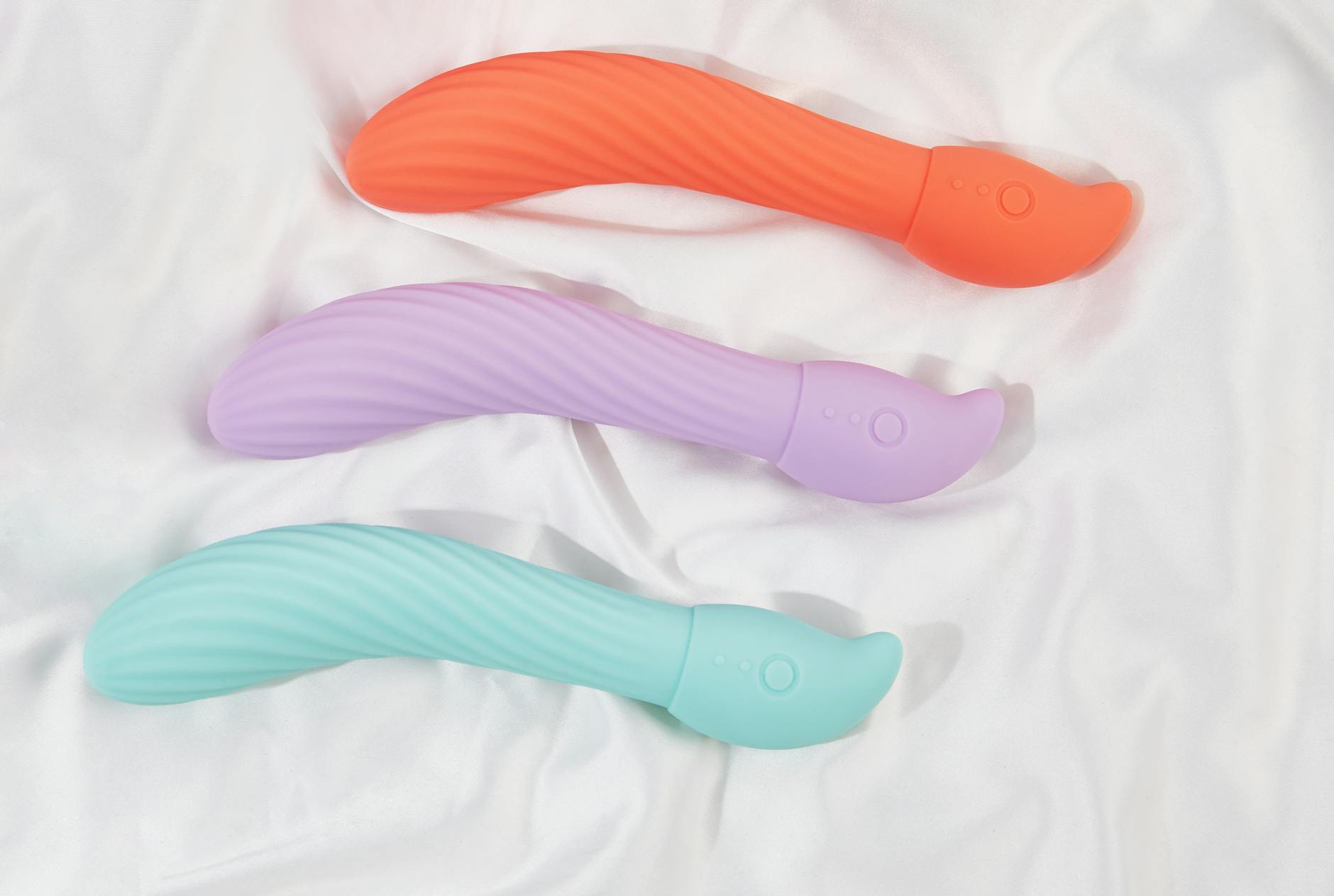
Let's talk about the plateau nobody mentions
You still want pleasure. You're still attracted to yourself. But somewhere between month three and year three, solo sex became less like exploration and more like checking a box. The same routine, the same ten-minute window, the same predictable finish. It works. It's effective. And it feels about as exciting as brushing your teeth.
This isn't broken. This is boredom. And boredom is actually useful information.
Why routine happens (and why it's not your fault)
Neural adaptation is real. Your brain is exquisitely efficient at building pathways that work. Once your nervous system learns the fastest route to orgasm, it takes that route every single time. It's like driving to work. After a hundred trips, you're not thinking about the turn-by-turn anymore. Your brain is already anticipating the next light.
Add in stress, routine life, scrolling, the ambient dysregulation of 2026. Your body's baseline arousal drops. You get less response to the same touch. So you push harder or faster to compensate. Now you've trained yourself on intensity instead of sensation. Pleasure narrows to a single, high-speed note.
Then there's the mental piece. If solo sex lives in the margins of your day, squeezed in before sleep or between meetings, your brain doesn't fully arrive. You're multitasking with orgasm. Your attention is split between pleasure and a to-do list. Of course it feels flat.
Why a lemon vibrator changes the equation
Here's the thing about clitoral vibrators, especially the suction-based design of lemon sexual toys: they stimulate nerves differently than fingers or conventional vibration. The lemon clitoral vibrator uses gentle, pulsing suction that mimics the kind of sensation your body hasn't quite adapted to yet. It's not friction. It's not a single, predictable rhythm.
That novelty alone interrupts the neural pathway. Your nervous system has to show up. It can't autopilot through a sensation it's never quite built muscle memory for.
Beyond the device itself, introducing a lemon vibrator also forces a tactical reset: different tool, different position, different pressure points on your body. You're not retracing old routes. You're exploring new territory.
Five tactical shifts that actually work
1. Set a time boundary that isn't about speed.
Instead of "I have ten minutes," try "I'm giving myself twenty minutes and permission to not orgasm." Seriously. Take the finish line off the board. The minute orgasm becomes the goal, pleasure becomes performance. Give yourself time to notice what actually feels good right now, not what usually works.
Use the first five minutes of your lemon vibrator session to simply explore. Try different intensity settings. Move it slowly. Notice what pattern makes your breath shift. This is not foreplay to the main event. This is the event.
2. Change your environment or position intentionally.
If you always lie in bed in the dark, try the shower in afternoon light. If you're always still and quiet, try standing, or lying face-down, or propped up against pillows so you can watch the sensation. A different position changes what your clitoral anatomy feels like under stimulation. The angle of the lemon vibrator against your body, the weight of gravity, the view from your eyes. All of it matters.
3. Introduce intentional distraction in a new way.
Not scrolling or thinking about work. That's passive distraction. Active distraction: play music that gets into your body, or erotic audio you've never heard, or read something that shifts your brain state. Let a lemon sucker vibrator be just one input in a fuller sensory mix. Your nervous system wakes up when it has to process multiple channels at once.
4. Extend your warm-up, even if you think you don't need one.
Pleasure isn't just clitoral. Spend five to eight minutes touching other parts of your body first: your inner thighs, your breasts, your neck, the inside of your wrists. Build arousal slowly. Let your body remember that sex is full-body, not a single target area. Then introduce the lemon vibrator. It'll feel radically different when your nervous system is already engaged.
5. Track what actually shifts sensation, and repeat it.
After three or four sessions with your lemon clitoral vibrator, you'll notice patterns. Maybe intensity level three hits differently than your old speed. Maybe a certain position makes the sensation feel more localized. Maybe a particular piece of music changes your breath. Write one word down. "Afternoon light." "Standing." "Pattern 2." Next time, deliberately build around that variable. You're not falling into routine again. You're building on what works, intentionally.
The mindset shift that matters
Solo pleasure isn't a warm-up act. It's not supplementary. It's the primary relationship you have with your own body. Treating it like a task to complete, rather than an experience to inhabit, tells your nervous system that your pleasure doesn't matter enough to show up fully for.
When you use a lemon vibrator or any tool, you're not fixing yourself. You're giving your brain permission to experience something new. That permission is the whole point.
Photo by cottonbro studio on Pexels
What if the lemon vibrator doesn't "fix it" immediately
Sometimes the first three sessions with a new lemon sucker vibrator feel awkward. Your body is learning. Your brain is curious but skeptical. That's normal. Give yourself at least five to six sessions before you decide whether this tool actually works for you. Neural adaptation runs both directions. It takes time to build new pathways.
If after six solid attempts the lemon clitoral vibrator still doesn't shift things, consider whether the routine goes deeper. Sometimes flatness in solo sex mirrors flatness elsewhere: not enough sleep, chronic stress, a relationship that's depleting your energy, medication changes. A tool can't fix everything. But it can crack open the door long enough for you to notice what else might need attention.
That said, most people find that simply changing the tool, the timing, and the permission structure around solo pleasure reignites something real. The lemon vibrator doesn't do the work. You do. The vibrator just makes it possible for you to show up differently.
When to expand beyond the solo session
If you're in a partnership, here's a bonus: the things that make solo sex feel alive again also make partnered sex more interesting. The novelty of a lemon vibrator, the different sensations, the breaks in routine. All of it translates. If you've been curious about introducing a device with a partner, a period of solo exploration first gives you language and confidence. You know what this thing does. You know what you like. That information is gold when you're trying to communicate with someone else.
Read more on how to use a lemon vibrator for the first time with your partner if you're thinking about that bridge.
The real indicator that something shifted
You'll know things have changed when you stop clock-watching. When you find yourself going longer than you expected because you're genuinely curious about the next sensation. When you think about your solo time during the day, not because you feel obligated, but because you're looking forward to it. That anticipation is the signal that you've broken the routine. Your nervous system is engaged again.
Pleasure is supposed to be surprising. If it's stopped surprising you, that's not a failure. That's just information that you're ready for something different. A lemon clitoral vibrator, a time boundary that actually respects your experience, and permission to explore rather than achieve. Start there.
People also ask
How long does it take for a lemon vibrator to feel less routine if I've been using traditional vibrators for years?
Most people report novelty within the first three to five uses. The suction sensation on a lemon clitoral vibrator is genuinely different from conventional vibration, so your nervous system recognizes it as new input pretty quickly. That said, if you fall into a routine with the lemon vibrator too, the same principles apply: change the timing, change the intensity, change the context. The tool matters less than your intentionality around it.
Can using a lemon vibrator too frequently make me numb to it, like it happened with my last vibrator?
Yes, if you use it the same way every single time. The solution isn't to use it less. It's to vary how you use it. Try different intensity levels, different positions, different contexts. Novelty is your friend. A lemon sucker vibrator gives you more room for variation than a traditional vibrator because the sensations are subtly different at each setting. Lean into that.
Is it normal that my body responds better when I use a lemon vibrator in the afternoon rather than at night?
Absolutely. Cortisol, energy levels, nervous system regulation, and how full your to-do list feels all shift throughout the day. Your body isn't broken if it responds better at three p.m. than eleven p.m. Pay attention to when your nervous system is actually available. That's not a limitation. That's data you can build a better routine around.
What if I've been using a lemon clitoral vibrator for a few months and it's starting to feel routine again?
Circle back to the five tactical shifts above. If you've settled into the same intensity, same position, same time, you've just replaced one routine with another. The device isn't the variable anymore. Your behavior is. Deliberately change one thing next week. Different setting. Different position. Different music or audio. Break the pattern intentionally.
Should I use a lemon vibrator every time I have solo sex, or mix it with other methods?
Mix it. Your body benefits from variety. One day a lemon vibrator. Another day fingers and slow touch. Another day a different vibrator altogether. Rotation prevents adaptation and keeps your nervous system engaged. Plus, some days you'll want the intensity of the lemon sucker. Other days you'll want something gentler. Tune in to what your body actually wants, not what's quickest or easiest.
How do I know if the problem is the tool or something deeper like depression or relationship stress affecting my libido?
If flatness in solo pleasure is the only place you feel flat, it's probably a routine issue. But if you're also feeling numb in other parts of your life, or if your body feels heavy and disconnected most of the time, or if relationship stress is consuming your headspace, that needs attention too. A lemon vibrator can help break the routine, but it can't fix depression or serious relational friction. Talk to someone. The tool and the conversation aren't mutually exclusive.
The bottom line
Routine solo sex isn't a personal failure. It's your nervous system doing exactly what nervous systems do: optimizing, automating, taking the familiar path. The moment you notice it, you've already won. You're aware. You can change it.
A lemon vibrator is a tool that works beautifully for this shift because the sensation is novel and the device itself forces you to pay attention differently. But the real work is yours: showing up with intention, giving yourself permission to explore, and breaking the patterns you've outgrown.
Your solo pleasure matters. Treat it that way. If you want to explore how these ideas translate to partnered intimacy or navigate communication around pleasure, reach out to our team and let's talk through it.
Sources and further reading
- Bergland, C. (2015). "The Neurobiology of Habit Formation." Psychology Today.
- Komisaruk, B. R., et al. (2006). "Women's Clitoris, Vagina, and Cervix Mapped on the Sensory Cortex." The Proceedings of the National Academy of Sciences.
- Meston, C. M., & Frohlich, P. F. (2000). "The Neurobiology of Sexual Function." Archives of General Psychiatry, 57(11), 1012-1030.