Infidelity rewires arousal. Here's what actually happens.
When a partner is unfaithful, the body doesn't just feel betrayed. It panics. Desire shuts down. The nervous system goes on high alert, screening every touch for danger. You might freeze during sex, or dissociate entirely. Your arousal doesn't come back because you stopped trusting. And trust doesn't come back because you can't access arousal. It's a locked loop.
I work with couples in this space regularly. The ones who heal aren't the ones who pretend it didn't happen. They're the ones who rebuild pleasure deliberately, using tools that shift the power back to the hurt partner.
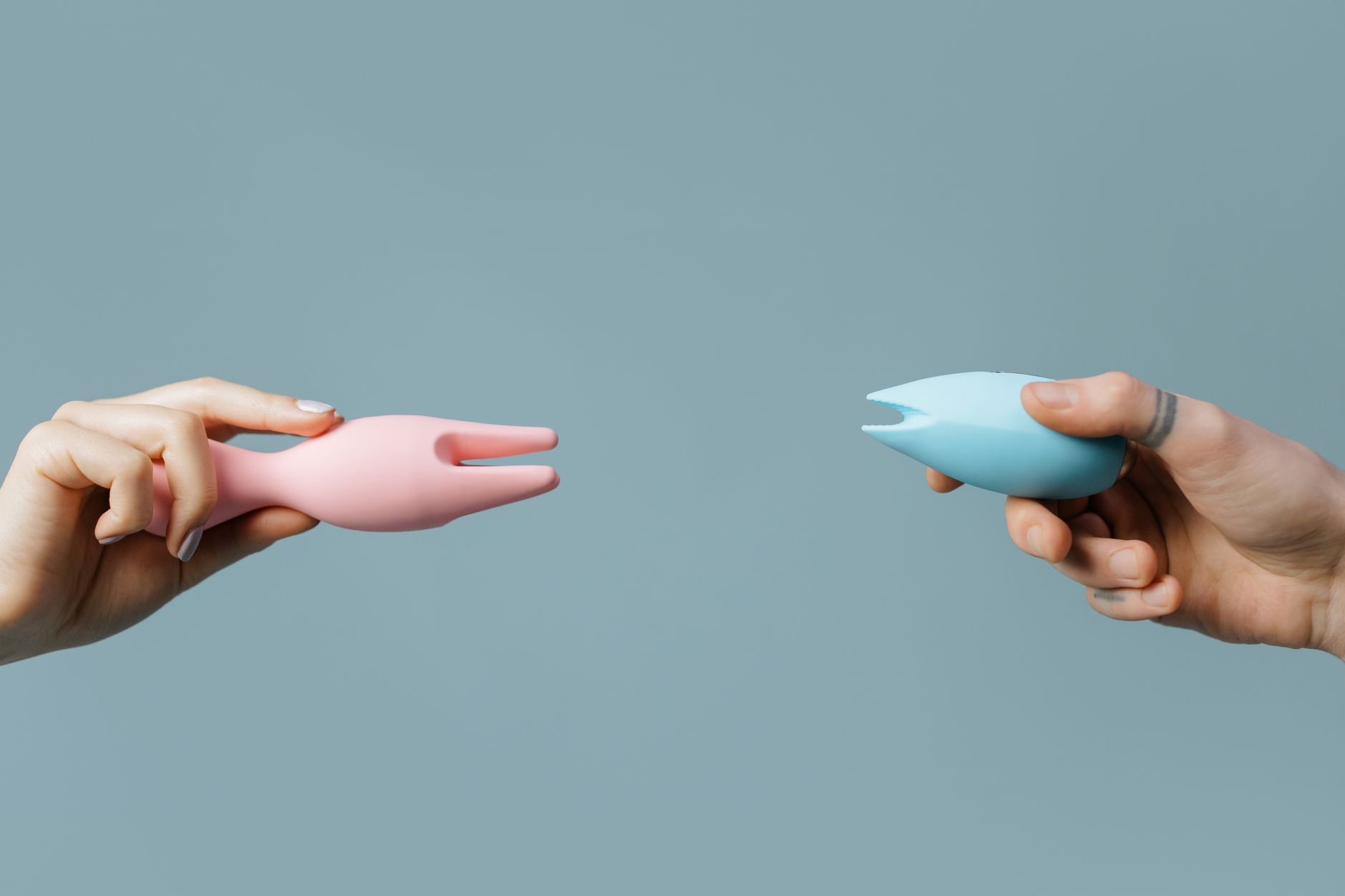
A lemon vibrator, used intentionally, can be that tool.
Why clitoral pleasure matters more than reconciliation sex
Here's what most couples get wrong after infidelity: they try to heal through connection. They schedule sex. They light candles. They perform intimacy while the betrayed partner is still in fight-or-flight mode. It fails because you can't logic your way back to arousal when your amygdala is screaming.
But something shifts when the person who was hurt takes back their own pleasure first. Not as a punishment. As a reclamation.
When you use a lemon clitoral vibrator solo, or with your partner in the room simply witnessing, you're doing three things at once:
- You're regulating your nervous system through targeted physical sensation.
- You're reminding yourself that your body is yours, not damaged, not responsible for their choices.
- You're creating new, safer neural pathways around arousal in your partner's presence.
Research on trauma and embodiment shows that pleasure, especially self-directed pleasure, is a powerful tool for reclaiming agency after betrayal. A lemon sucker like the Lem works particularly well because it's external, doesn't require penetration, and gives you complete control over intensity.
Starting solo. Why this matters first.
I always recommend that the betrayed partner uses their lemon vibrator alone for at least 2-4 weeks before involving the other person. This isn't punishment. It's repair.
During solo sessions, you're not performing. You're not managing their feelings about your pleasure. You're just reconnecting with what feels good on your own body, in your own time, without an audience.
Here's the rhythm I suggest:
Week one: Start with a lower setting on your lemon clitoral vibrator. 10-15 minutes, no goal, no pressure to orgasm. If you do, great. If you don't, that's also great. The point is novelty and sensation without stakes.
Week two: Increase to setting two or three. Spend time just exploring. What patterns feel good today? What feels different than it did before? Notice without judging.
Week three and four: Move to your preferred setting. If orgasm happens, let it. If it doesn't, stay curious. The goal is rebuilding your own internal sense of "yes" that has nothing to do with your partner's actions.
Don't tell your partner about this immediately unless you want to. This time is for you.
When your partner enters the picture.
Once you've spent a month reclaiming your own arousal, the conversation is different. You're not saying "please help me feel good." You're saying "I feel good. I want to explore this together."
That shift in language is everything.
When you're ready, here's how to bring a lemon vibrator into partnered time:
Start with honesty about what you need. "I need you to watch. I need you to be interested in my pleasure without trying to make it about fixing things between us." That's it. Don't soften it. Don't make it safe for them. Make it true.
Let them watch you first. Use your lemon clitoral vibrator the way you would alone. Don't perform. If you forget they're there, that's a good sign. If you can't forget they're there, that's information too. Stop and name it: "I'm having trouble relaxing. This doesn't feel like mine right now."
After a few sessions of this, they can touch other parts of your body. Not genitally. Not yet. Maybe your back, your shoulders, your hair. The point is to gradually let them back into your sensory world without them being in control of your pleasure.
Weeks later, after you feel genuinely aroused with them present, move to partnered stimulation. Your partner might use their fingers on you while you use your lemon vibrator. They might use it on you. The key: you're in control of the pace and intensity. They're following your lead, not driving it.
This sounds slow. It is. But couples who move at this pace actually stay together. The ones who rush back to penetrative sex often don't.
The things that derail you (and how to stay grounded).
Three patterns I see constantly with couples rebuilding after infidelity:
Pattern one: you start to feel guilty about your pleasure. You catch yourself thinking "shouldn't I be focusing on their feelings?" Or "are they okay watching me?" When this happens, pause. Use your lemon vibrator solo again for a few sessions until your entitlement to your own pleasure is solid. Guilt is a sign you've drifted back into caretaking mode.
Pattern two: you orgasm and immediately feel disconnected or numb. This is the nervous system protecting you from vulnerability. Don't interpret it as a sign that reconciliation is impossible. It's just a sign that you need more time. Orgasm after betrayal can feel dangerous because it opens you up. That's real. That's also something that shifts with repetition and safety.
Pattern three: your partner gets defensive about the lemon vibrator. "Does my touch not feel good anymore?" "Are you saying I'm not enough?" This is their stuff, not yours. A calm response: "I need this tool right now. It has nothing to do with you and everything to do with me rebuilding my own arousal. You're welcome to be part of this, and you're also welcome to sit with the fact that I'm doing something just for me." That boundary is not unkind. It's necessary.
When pleasure returns, what comes next.
Eventually, if you both stay present and honest, arousal does come back. It usually arrives quietly. You're using your lemon clitoral vibrator with your partner in the room and suddenly you're not managing your feelings. You're just here, in your body, in pleasure. Your partner is touching you and you don't flinch. You climax and you feel connected, not fractured.
That's the moment when you know you can move forward.
What's critical: moving forward doesn't mean forgetting. It means your pleasure is no longer contaminated by the betrayal. The affair happened. And you got your body back anyway.
Some couples find that partnered sex becomes deeper after this kind of intentional rebuilding. Others discover that they want something different than what they had before. Both outcomes are healing.
If you're in this position right now, use your lemon clitoral vibrator as a tool for your own reclamation, not as a fix for your relationship. The relationship heals or it doesn't. What you can control is whether you heal.
Frequently asked questions.
Can we use a lemon vibrator together immediately after discovering infidelity?
Not effectively. Your body is in survival mode. Using a vibrator together too soon often means the betrayed partner is performing pleasure instead of feeling it. Solo use first rewires your nervous system's response to arousal in your partner's presence. Once you can access genuine pleasure alone, partnered use becomes possible.
Does using a vibrator mean I don't want my partner anymore?
No. It means you're building a relationship with your own body first. That's actually what makes partnered intimacy sustainable after betrayal. Many couples find that the years after infidelity, handled well, have some of the deepest intimacy of their marriage. The tool isn't a replacement for your partner. It's a bridge back to being able to trust them with your vulnerability.
What if my partner wants to use the vibrator on me but I'm not ready?
That's information. Honor it. "I'm not ready for that yet" is a complete sentence. If your partner pushes, that's a separate problem that might need a couples therapist. Rebuilding after infidelity requires both people to respect timing. If one person is rushing, resentment builds.
How long does this actually take?
Three to six months for meaningful reconnection. A year for true trust rebuilding. Some couples need longer. The timeline isn't linear. You'll have weeks of progress and then a day where something triggers you back. That's normal. It's not failure.
Can we ever have the same kind of sex as before the affair?
Possibly, but probably not. And that might be fine. Sex after infidelity often becomes more intentional, more communicative, less automatic. Some couples find that version is actually better. Others realize the affair surfaced other issues. A lemon clitoral vibrator can help you access pleasure again, but it can't answer the bigger question of whether this relationship is right for you. That's a conversation with a therapist, not a toy.
What if I'm using the vibrator but I still can't orgasm with my partner present?
That's common and usually temporary. Your body is protecting itself. Keep using your lemon vibrator solo until orgasm feels safe, then gradually extend that safety to partnered sessions. Sometimes a therapist specializing in sexual trauma can help speed this up. There's no rush. Your nervous system will move at its own pace.