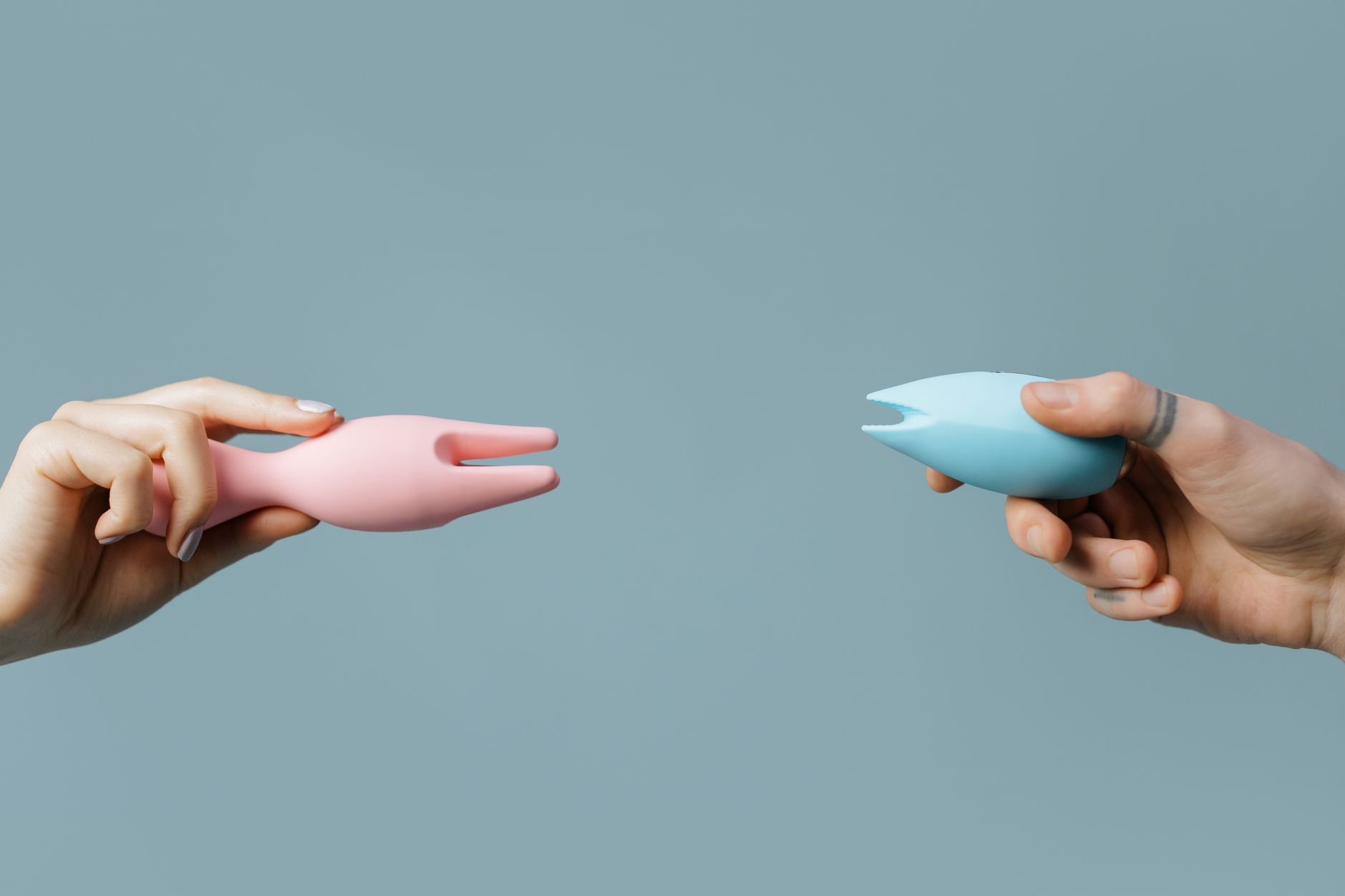
The pattern nobody talks about
You know the one. Your partner gets off, and somewhere around the middle you're thinking about whether you're taking too long, whether they're getting tired, whether you should just finish things up so they can relax. Your pleasure becomes background noise. The Lemon clitoral vibrator can change that, but only if you're willing to change the story first.
Here's what I see in my therapy practice: most people with partners have learned, over months or years, to make their partner's satisfaction the center of the sexual experience. It's not always conscious. Sometimes it starts with "I'm easier to please anyway," or "they get frustrated if it takes too long." Other times it's embedded in the relationship so deep you don't even notice you're doing it. But the result is always the same. Your orgasm becomes optional. A nice bonus, not the point.
That pattern doesn't just affect sex. It bleeds into how you think about your body, your needs, your right to ask for what you want. Using a lemon sucker or lemon vibrator isn't just about getting off faster. It's about rebuilding the belief that your pleasure is worth protecting.
Why the pleasure gap feels normal
There's actual neuroscience here. When you've spent years managing someone else's emotional state, your brain literally rewires around it. You become hyperaware of their body language, their breathing, their satisfaction level. You're running a constant background process of "Is this still good for them?" That cognitive load is real, and it uses up mental space you'd normally use to feel your own body.
Add to that the fact that most people haven't been taught that their own orgasm matters equally. Cultural messages are loud. You hear from every direction that male pleasure is the goal, that female pleasure is a bonus that happens if the stars align, that asking for more is needy. So even in relationships where your partner actively wants you to feel good, you might be sabotaging yourself because some older part of you doesn't believe you deserve it.
A Lemon clitoral vibrator works in this space because it gives you permission in a physical form. You're not relying on your partner to get you there. You're not waiting for the exact right moment. You're taking your pleasure seriously enough to use a tool designed specifically for clitoral stimulation. That shift from passive to active is more important than the vibration itself.
The practical setup that actually works
Here's where most people go wrong: they try to integrate the Lemon vibrator into partnered sex the exact same way their partner integrates themselves. That doesn't work because the dynamics are completely different.
First, decide whether you want to use it during partnered sex or alongside it. Both are valid. During means your partner is inside you, or you're together, and you're using the vibrator on yourself. Alongside means you're together, but your pleasure happens separately, on your timeline. Some couples do both depending on the day.
If you choose during: tell your partner explicitly. "I want to use this while we're together because I want to feel good too." That's it. Not asking permission. Stating a fact. Most partners are relieved. They're not actually getting pleasure from watching you struggle to come. They want you to feel good. But they can't know that's what you need unless you say it.
Position matters more than you think. If you're on top, you can hold the vibrator and control the angle. If you're underneath, you might need a different angle or pattern. The Lemon vibrator's suction design works especially well here because it doesn't require penetration to work. You can use it before, during, or after partnered sex without anything getting in the way.
Timing is the real game-changer. Most people try to come at the exact same moment as their partner. Abandon that idea completely. Your body has its own rhythm. You might need 5 minutes or 20. Your partner might come in 3. That's not a problem. After they finish, you keep going. You can kiss, they can watch, you can do absolutely nothing while you focus. The goal is your orgasm, not synchronized pleasure.
What changes when you prioritize yourself
Honestly? The first few times feel strange. You might feel guilty. You might feel selfish. You might feel like you're putting on a show instead of actually enjoying yourself. That's the brain lag. Your nervous system has been wired to focus outward for so long that inward focus feels wrong. It isn't. Keep going.
After three or four times, something shifts. Your body starts to trust that this is actually about you. The guilt softens. You realize your partner is fine. They're actually happy watching you use the lemon vibrator to come, because it means the pressure is off them to be your entire source of pleasure. That's enormous relief in a relationship.
You'll also notice that you come differently. Maybe stronger. Maybe with less anxiety. Maybe you notice sensations you'd glossed over before because you were too busy managing the dynamic. When you stop holding your breath to see if your partner is still engaged, you can actually feel your body.
Some people also find that reclaiming their own pleasure in sex changes how they ask for things outside the bedroom. If you can say "I want to use this vibrator," you can say "I want to take a weekend alone," or "I want to spend money on something just for me," or "I want us to try therapy." The permission you give yourself in sex spreads to the rest of your life.
Common friction points and how to move through them
"It feels clinical, not sexy." True, at first. The solution is to stop trying to perform sexiness and let actual pleasure be sexy. When you're genuinely engaged with your body instead of watching yourself, your partner will find it hotter. Full stop.
"They feel left out." Have a conversation. Explain that you need this to feel good, and that includes them. They're not being replaced. They're giving you something your body needs. That's intimacy.
"I come, but then I feel awkward." Normal. You've probably spent years either skipping orgasm or hiding it. Coming takes vulnerability. Sit with it. Stay in your body for five minutes after. Your partner can hold you. The awkwardness fades fast once you do it a few times.
"My partner wants to watch but I'm uncomfortable." That's completely fair. Use the Lemon vibrator when you're alone, or in the dark, or under a blanket. Your comfort comes first. If your partner is pressuring you to perform pleasure for them, that's a different conversation, and it might be worth talking to a therapist.
Building the permission structure
This is the part that actually matters. The vibrator is just the tool. The real work is deciding that your satisfaction is non-negotiable.
Start by using the Lemon clitoral vibrator alone, without a partner present. Get to know your body without managing anyone else's experience. Notice what patterns, speeds, and pressure actually feel good. Most people discover they've been settling for less intense sensation than they actually need because they were unconsciously minimizing their own response.
Then, when you're ready, introduce it into partnered sex in whatever way feels natural. You can frame it as exploring together. You can frame it as something you need. Both are true. The point is not to ask permission or apologize. You're stating a reality about your body and your pleasure.
If your partner responds negatively to you using a lemon vibrator, that's information. It tells you something about how they feel about your pleasure mattering. That might require a conversation. It might require rethinking the relationship. But it's worth knowing.
Here's what I tell people in my practice: your sexual satisfaction isn't a reward for being a good partner. It's a baseline. You deserve to feel good during sex, whether your partner is involved or not. A Lemon vibrator isn't a luxury. It's a way of saying yes to yourself.
When to get support
If you've spent a long time deprioritizing your own pleasure, reclaiming it might bring up bigger stuff. Resentment. Grief. Anger that your partner never asked what you wanted. Those feelings are valid and worth exploring, ideally with someone trained to help.
If the guilt about using a vibrator is coming from a specific person in your past (a parent, a religious figure, an ex), that's also worth unpacking. Your pleasure belongs to you. Not to anyone else's beliefs about what's acceptable.
If your partner is threatened by the vibrator, or if using it leads to conflict about your body or your needs, that's a sign the relationship might need some help. A good couples therapist can navigate that. A good partner will want you to feel good.
Most importantly, remember this: wanting your orgasm to matter isn't selfish. It's the foundation of actual intimacy. When both people know their pleasure is important, the whole dynamic changes. You stop performing and start connecting. That's when sex gets good.
FAQ
How do I tell my partner I want to use a Lemon vibrator during sex without making it weird?
Just tell them. "I want to use a vibrator when we're together because I want to feel good too." No apology, no long explanation. Most partners appreciate the directness. If they ask questions, answer them. If they seem upset, ask why. You might discover it's not about the vibrator at all.
What if my partner gets insulted that I "need" a vibrator?
That's about their insecurity, not about the vibrator. A vibrator isn't a replacement. It's a tool. You need it the same way you need a toothbrush. Your partner can't be everything your body requires. That's biology, not a reflection on them. A secure partner gets this. An insecure one might need reassurance, but the vibrator isn't going anywhere.
Should I hide it, or should they know?
If you're in a relationship where you feel you have to hide your own pleasure, that's a relationship problem that goes way deeper than the vibrator. Ideally, your partner knows and supports you using it. If that feels unsafe, consider whether this relationship is actually serving you.
Does using a lemon sucker make it harder to orgasm with a partner without it?
No. Your body is capable of many things. You can come with a vibrator, with a partner, with both, or alone. These aren't competing skills. They're all valid. Using a Lemon vibrator doesn't make partnered orgasms less possible. If anything, it gives you more confidence in your own pleasure.
What if I come too fast with the vibrator and my partner isn't ready?
Then you come, and your partner finishes on their own time. Or you keep going together. Or you slow down. You have options because it's your body. The pressure to time everything perfectly is actually what's been keeping you from enjoying yourself. Let it go.
Can I use a Lemon vibrator if my partner has never seen me come?
Yes. In fact, this might be the perfect way to let them see how your body responds to real pleasure. It's vulnerable. It's also beautiful. Most partners find it incredibly hot.
Your pleasure is worth protecting
You've spent years, maybe decades, making sure someone else feels good. That generosity is real. But it can't come at the expense of your own satisfaction. A Lemon clitoral vibrator is one tool for reclaiming that. The bigger shift is deciding that your orgasm matters as much as theirs does. Once you believe that, everything changes.