Here's the thing about mismatched desire
Your partner wants sex three times a week. You want it once, maybe twice on a good month. Neither of you is broken. This is one of the most common relationship problems I see, and it's almost never about attraction. It's about bandwidth, stress, hormones, and how your nervous systems operate.
The danger zone is when the higher-desire partner feels rejected and the lower-desire partner feels pressured. A lemon clitoral vibrator doesn't fix that dynamic by itself. But it shifts the conversation from "we need to compromise" to "you can have pleasure without needing me to perform at a frequency that drains me." That's actually powerful.
Why frequency mismatch happens (and why it's not personal)
Desire doesn't work like a light switch. It's more like a dimmer controlled by stress, hormones, emotional safety, and physical energy. When your partner wants sex more often than you do, a few things are usually happening at once.
First, your baseline sexual appetites are genuinely different. Some people's nervous systems are wired for more frequent sexual release. Others need longer recovery time between sessions. Neither is better. But living with someone wired differently can feel like one person is "too much" and the other is "never enough."
Second, something is probably occupying your bandwidth. Work stress, parenting, health issues, relationship conflict that hasn't fully resolved. Your partner might have the same stressors but channeling them through sex as a way to feel close. You're channeling them by needing solitude and decompression. Both make sense.
Third, your partner's requests might be triggering a subtle pressure response in you. Even if they're not being pushy, the frequency of the ask can feel like an ask. And when sex starts to feel obligatory, desire actually drops further. It's counterintuitive but true.
The conversation before you bring in a lemon vibrator
Don't hand your partner a vibrator and hope the problem disappears. That reads as "use this instead of bothering me," which makes things worse.
Instead, start with this frame: "I want you to feel good. And I also need you to know that my lower frequency isn't about you or how I feel about you. It's about my nervous system needing more time between sexual experiences. Let's figure out how we both get what we need without me feeling pressured or you feeling rejected."
Then listen. Your partner might be using sex to process anxiety, to feel connected, to regulate their nervous system. Understanding the function of their desire matters more than the frequency of it.
Once you understand what's driving it, you can problem-solve together. That's when a lemon vibrator enters the conversation naturally. "What if on nights when I'm not feeling it, there's a way for you to experience pleasure without needing me to be present in the same way?"
How a lemon clitoral vibrator changes the dynamic
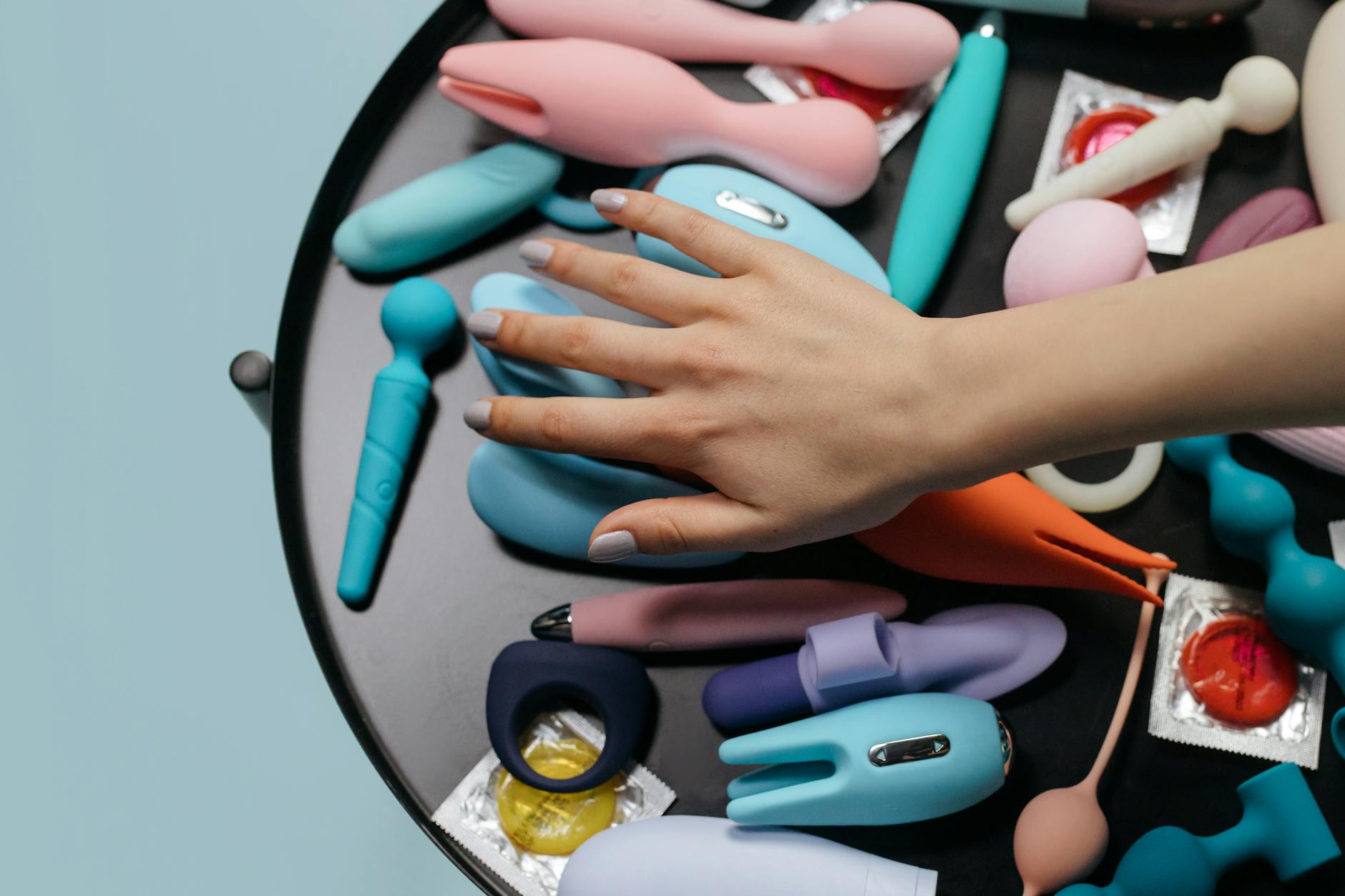
A lemon vibrator is specific: it's designed for clitoral stimulation through gentle suction and pulsing, not traditional vibration. That matters here because it addresses a real physiological difference between partnered sex and solo play.
When your partner uses a lemon clitoral vibrator on their own, they're not waiting for your arousal to build. They're not managing your comfort, your pace, your needs. They're moving at their own rhythm, accessing the exact kind of stimulation their body responds to best. Many people reach orgasm faster and more reliably with a lemon vibrator than they do during partnered sex. That's not a reflection on you. It's just how bodies work.
For you, this shifts something psychologically. Your partner having an independent way to meet their sexual needs takes the pressure off you. Sex becomes something you choose, not something you're obligated to provide. And paradoxically, removing obligation often increases actual desire.
Setting it up so nobody feels weird about it
The biggest mistake couples make is treating the vibrator like a secret or an alternative to partnered sex. That reinforces the idea that something's wrong with the arrangement.
Instead, normalize it. "I'm going to read for a bit. Do you want to go take some time for yourself?" No shame, no spectacle, no awkwardness. Your partner isn't cheating on you. They're managing their own needs.
You can also integrate it into partnered sex in ways that work for both of you. If you want to be intimate but not penetrative or not at the frequency your partner wants, a lemon vibrator lets them get stimulation while you're still connecting physically. You're not performing. You're present in a different way.
Some couples find that building in a regular "you time" window helps. Maybe Tuesday and Thursday nights are dedicated solo time, and Saturday mornings are for partnered sex. Predictability removes the constant negotiation.
What this actually requires from both partners
For the higher-desire partner: accepting that your partner's lower frequency is real, not something to negotiate or change. A lemon vibrator is a tool for meeting your own needs, not proof that your partner doesn't love you or isn't attracted to you.
For the lower-desire partner: giving yourself permission to say yes to partnered sex sometimes without resentment. If you're always protecting your energy, your partner never gets to feel wanted. That builds distance. The goal isn't to match their frequency. It's to create pockets of genuine connection that feel good for both of you.
The real work is emotional. Can you stay curious about why your partner wants sex as often as they do? Can they stay curious about why you don't? A lemon vibrator helps with the logistics. Curiosity and compassion do the actual healing.
When frequency mismatch is actually about something else
Sometimes mismatched desire points to a bigger issue. Your partner uses sex to avoid emotional conversation. You use distance to punish conflict. One of you is dealing with depression or anxiety. One of you is still processing resentment from years ago.
In those cases, a vibrator is a helpful tool but not the solution. You might need a couples therapist who specializes in sexual health and relationship dynamics. That's not a failure. That's wisdom.
But if the core issue is just "we have different baselines," a lemon clitoral vibrator genuinely does help. It takes something that felt like a zero-sum game and creates a third option.
The pleasure part (for you, specifically)
Here's what often gets lost: using a lemon vibrator when your partner wants sex more often isn't just about managing their needs. It's about reclaiming your own.
Your lower desire might actually be low responsiveness, not low interest. You might find that when you have the space to explore your body without the pressure of someone else's timeline, things shift. A lemon vibrator is excellent for that because suction stimulation can access nerves that traditional vibration misses. Many people find their most intense orgasms come solo, with a lemon clitoral vibrator, on their own timing.
Taking that time isn't selfish. It's an act of self-knowledge. You're learning what actually turns you on, what your body needs, what your nervous system responds to. That information makes you a better lover and a more fulfilled partner.
FAQ: Frequency mismatch and lemon vibrators
Is it normal for partners to want sex at different frequencies?
Completely normal. Research suggests about 34 percent of couples have significant mismatches in desired frequency. Most long-term couples navigate this at some point. The key is treating it as a logistics problem, not a relationship problem.
Will using a lemon vibrator damage our sex life?
No. It actually protects it by removing resentment. When the lower-desire partner feels pressured, partnered sex becomes something to avoid. When the higher-desire partner feels rejected, they build distance. A lemon clitoral vibrator keeps both people's needs met separately, which usually makes partnered sex feel more connected when it happens.
Can my partner use a lemon vibrator while I'm present?
Absolutely. Some couples find that watching or touching while their partner uses a lemon vibrator is actually intimate. It removes the performance pressure from both sides. You're present without needing to perform. Your partner gets pleasure. Everyone wins.
How do I bring this up without my partner thinking I'm rejecting them?
Lead with what you want, not what you don't want. "I want us both to feel satisfied. I'm realizing my body needs more time between sexual experiences, and I don't want that to feel like rejection. What if we figured out a way for you to get what you need, and I could show up more fully when we are together?" Frame it as solving a problem together, not as you opting out.
Does using a lemon vibrator alone mean my partner doesn't want me anymore?
No. Desire operates on different timelines for different people. Your partner wanting solo pleasure doesn't mean they don't want you. In fact, people often want more partnered sex when they're not desperately needy for it. Solo time with a lemon clitoral vibrator can actually increase the quality of your time together.
What if my partner feels threatened by a vibrator?
That's usually about insecurity or a belief that sex should meet all emotional needs. It's worth exploring that directly. A lemon vibrator isn't a replacement for connection. It's a tool for self-care. If your partner can't separate those concepts, that's a conversation worth having with a therapist who specializes in sexuality and relationships.
The real shift
Mismatched desire doesn't have to be a source of resentment. A lemon clitoral vibrator can help, but the real work is in the conversation. You're learning that your partner's sexuality isn't about you. Your lower desire doesn't mean you're broken. Their higher desire doesn't mean they're pushy. You're just wired differently, and that's solvable.
Want to explore more about navigating desire and pleasure together? Reach out to Hello Nancy to talk through what's working and what isn't in your relationship. Sometimes the best tool is having someone help you both feel heard.