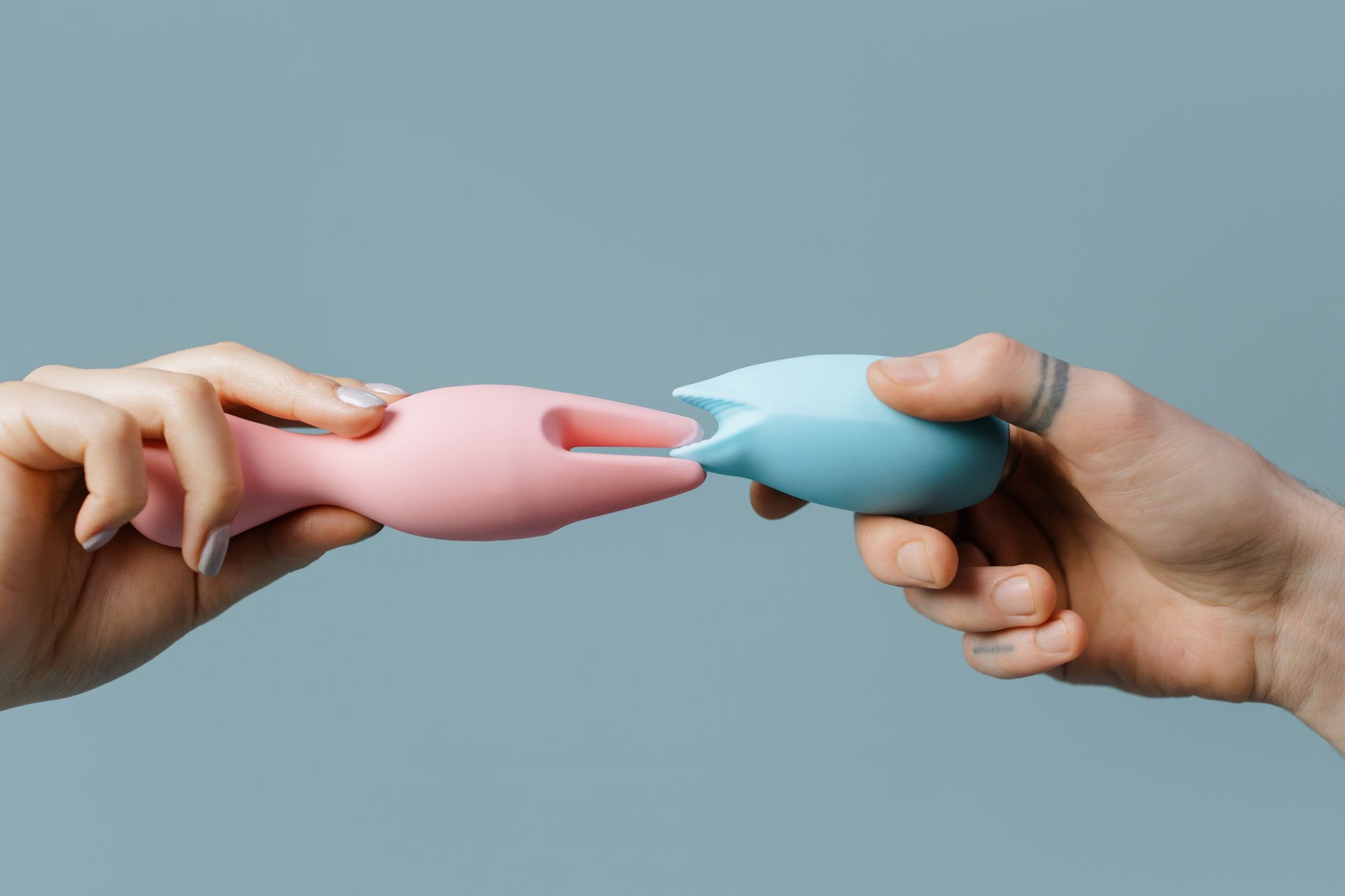
How to Use a Lemon Vibrator When Your Partner Prefers a Slower Pace
Here's the thing nobody talks about openly: the person who wants to rush and the person who needs more time often panic that they're sexually incompatible. They're not. They're just operating on different timelines.
One partner reaches arousal quickly. Their body signals ready. Meanwhile, their partner needs twenty minutes of buildup to feel present, and jumping straight to main event feels jarring. The person who warms up fast feels rejected when asked to slow down. The person who moves slower feels pressured. Both partners end up frustrated, and sexual encounters feel fraught instead of connective.
This is where a lemon clitoral vibrator changes the dynamic completely. Not by speeding anything up, but by giving the faster partner something focused to do while the slower partner gets the foreplay time they actually need.
The speed mismatch is neurological, not emotional
Your body's arousal timeline isn't something you choose. It's wired into your nervous system. Some brains crank up fast. Others need time to downshift from daily stress, calendar watching, and task-mode thinking before the nervous system flips to "safe for pleasure."
Neither timeline is wrong. But when they collide in bed, the narrative usually becomes "one of us is too much" or "one of us isn't interested enough." What's actually happening is a simple mismatch in arousal architecture.
The faster partner's body is sending this signal: I'm ready, let's move forward. The slower partner's body is saying: my cortisol hasn't fully dropped yet, I'm still half-listening for the dishwasher, I need actual relaxation time.
If the faster partner interprets slowness as rejection, they often either rush the slower partner (which backfires) or pull back emotionally (which kills the entire mood). If the slower partner feels nagged to move faster, they tense up, which makes everything take longer. You end up in a cycle where both partners feel unseen.
Why a lemon vibrator solves this without compromise
A device like the Lem gives you a third option: focus. Instead of the faster partner pushing for penetration or escalation while their slower partner is still warming up, the faster partner has a concrete role that supports exactly what the slower partner needs.
The Lem's suction pattern (that rhythmic pulsing, not harsh vibration) creates extended pleasure without pressure to move forward. You can use it for fifteen minutes, twenty, thirty. It doesn't demand escalation. It rewards presence.
This matters because the slower partner finally gets unrushed foreplay. Their body has time to actually respond. And the faster partner gets to focus on their partner's pleasure in a way that feels intentional, not like they're waiting around.

Photo by cottonbro studio on Pexels
How to set this up so it actually works
The first conversation happens fully clothed. Not during sex. This is important. When you're aroused, you can't think straight, and that's when couples make bad decisions about pacing.
Tell your partner something like: "I've noticed we have different speeds. I want more time to warm up, and you're often ready faster. That's not a bad thing, it's just how our bodies work. I'm thinking a vibrator could help us both feel better during this. What do you think?"
The reframe here matters. You're not saying "you rush me" or "you're too slow." You're naming a neutral fact and offering a solution. If your partner gets defensive or weird about it, that's a different conversation (and honestly worth having with someone who can help you both feel heard).
Once you've got agreement, here's the actual choreography:
Start with whatever foreplay already works for you. Kissing, touching, the usual opening. The faster partner isn't introducing the Lem because they're impatient. They're introducing it because it's fun and because it buys the slower partner more time.
When the slower partner's body is starting to respond (breathing is deeper, they're more present), introduce the vibrator. Not as a replacement for manual touch, but as an addition. The faster partner can use one hand to hold the Lem while the other hand is still engaged. This keeps everything connected.
Stay at lower speeds. The Lem has settings. Pattern 1 or 2 is not boring. It's sustained, it's sensual, it allows the slower partner's nervous system to keep opening without shock.
Talk about what feels good. Not clinical. Just "more like this?" or "that feel nice?" The slower partner gets to vocalize what they need instead of just hoping the faster partner picks up on it.
Don't set a clock. This defeats the entire point. The slower partner will feel rushed again. Instead, agree beforehand that you're taking as long as feels good. Twenty minutes, thirty, an hour. The faster partner gets to be present with their partner's pleasure instead of monitoring time.
What actually changes in your dynamic
When you solve the speed mismatch, something shifts. The slower partner stops bracing for pressure. The faster partner stops feeling like they're bothering anyone by being ready. Sex stops feeling like a negotiation and starts feeling collaborative.
The slower partner often reports that having sustained, focused stimulation actually helps them reach orgasm more reliably. It's not fast. It's deep.
The faster partner gets to be generous in a way that feels intentional. They're not giving up their own pleasure (you can absolutely use the vibrator on yourself during a partner's foreplay, by the way), they're creating space for their partner to fully arrive.
The Lem's design is specifically helpful here because suction patterns don't exhaust the way rhythmic vibration can. You can sustain it. You can use it for thirty minutes without anyone's hand getting tired. That's not an accident. A clitoral vibrator designed for couples needs to be sustainable.
Common worries (and what actually happens)
"Will the vibrator make me feel like I'm not enough?" No. Not if you frame it as a tool you're both using, which it is. The Lem isn't replacing your partner. It's literally the opposite. It's what lets your partner be more present with you.
"What if we still don't sync?" You might not. Some partners will always need different amounts of time. But a vibrator lets you both feel tended to instead of conflicted. That's actually the goal. Not forcing sync, but both feeling heard.
"Isn't this kind of... much?" Honestly? A lemon clitoral vibrator is less intense than some partners' hands during regular foreplay. You're not introducing rocket-ship sensation. You're introducing intentionality and sustainability.
When to bring this into the conversation
The best time is after sex, when you're both relaxed and talking anyway. Not as criticism. "Hey, I've been thinking. I know I need more time than you do, and I don't want that to make you feel bad. What if we tried something that gave us both what we need?"
If your partner is resistant, the issue might not be the vibrator. It might be that they feel rejected by your slower pace or worried they're taking too long. That's worth exploring separately, maybe with someone trained in couples dynamics.
If they're curious, great. You're building something: a sex life that works for both of you instead of one person constantly accommodating the other.
The real payoff
When you remove the pressure around pacing, something else opens up. The slower partner often finds they actually get more aroused because they're not in a defensive posture. The faster partner gets to experience their partner's genuine pleasure without feeling like they're forcing it.
You end up with sex that's longer, slower, more connected. You use a tool like the Lem not because you're missing something, but because you're being intentional about making space for both of you.
That's not a compromise. That's actually winning.
People also ask
Can I use a vibrator if my partner is already inside me?
Yes, but positioning matters. External stimulation with a lemon clitoral vibrator works best during foreplay or in positions where there's clear access. Reverse cowgirl or modified missionary make this easier. Some partners use the vibrator during penetration to increase pleasure, but this is more advanced. Start with foreplay first.
What if the vibrator intensity is distracting for the slower partner?
Start on the lowest setting. The Lem's patterns are subtle enough at low levels that they enhance rather than overwhelm. If pattern 1 still feels like too much, dial back for a few minutes and return to manual touch. You can always come back to the vibrator once your partner is more aroused.
How do we talk about this without it feeling like rejection?
Frame it as a team project, not a fix. "I've been reading about ways couples can make sex work better for both of us" is different from "we need to fix your slowness." You're on the same team solving the same problem together.
Does this work long-term or just in the honeymoon phase?
It works as long as you both want it to. Some couples use it every time for months, then naturally shift to using it sometimes. Others discover they prefer this rhythm and stick with it. The point is you've opened a door. How long you use it through isn't predetermined.
What if one partner likes this and the other doesn't?
Then you've learned something useful. Try it a couple of times, get honest feedback, and decide together. If one partner really doesn't like it, that's fine. There are other ways to address speed mismatch. This is just one tool.
Can the slower partner use the vibrator on themselves while the faster partner does something else?
Absolutely. This is actually a great middle ground if your partner feels weird about you holding it. You take charge of your own pleasure while your partner focuses on touch, kissing, or their own body. You're still in the moment together.
If speed mismatch has been creating friction in your relationship, you're not broken. You're just operating on different timelines. A lemon vibrator gives you both permission to move at your actual pace while staying connected. That's the whole point. If you want to talk through how to navigate this with your specific relationship dynamics, reach out. That's what I'm here for.