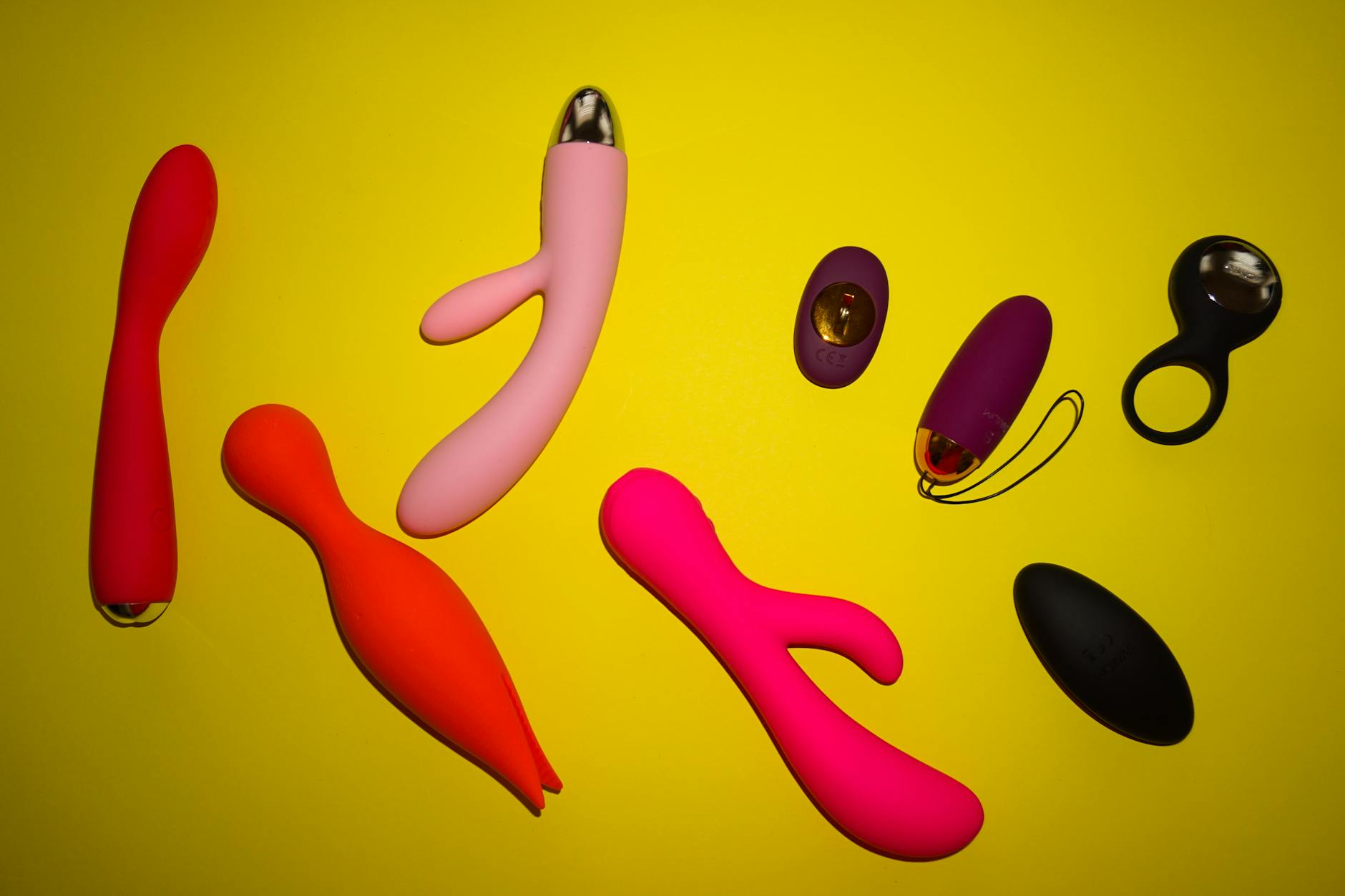
Let's talk about overstimulation
You bought a lemon vibrator because you heard it was incredible. You turned it on. And immediately thought: that's way too much. Not in a teasing way. In a "please turn that off" way. The intensity feels like it's attacking your clit instead of pleasuring it. Sound familiar?
Here's the thing. This is not a design flaw, and it's not you being broken. It means your body is telling you something useful: the default settings don't match your current sensitivity. That's actually good information.
Why some people feel vibration intensity as overwhelming
Clitoral sensitivity is not fixed. It changes based on hormones, arousal level, time in your cycle, how long it's been since you last came, medication, and even stress. A lemon clitoral vibrator that felt perfect three months ago might feel aggressive today. That's normal.
The clitoris has about 8,000 nerve endings concentrated in a tiny area. A high-frequency vibrator hitting that spot creates intense neural firing. For some people, that's exactly what they want. For others, especially when they're not fully warmed up yet, it can feel numbing, sharp, or overstimulating instead of pleasurable.
There's also the issue of expectation. You might think "a vibrator should feel more intense than my fingers," so you leave it on the highest setting. But actually, many of the best orgasms come from moderate, sustained stimulation rather than maximum vibration. Your body isn't rejecting the device. It's rejecting the frequency.
The modulation strategy that actually works
Four things you can control immediately.
Start at the lowest setting. Always. Even if you think you want intensity, your arousal hasn't built yet. The lowest pattern on a lemon vibrator is still sophisticated and effective. Spend at least ten minutes there, letting your body wake up. Intensity you add later will feel completely different than intensity you start with.
Use the tip, not the broadside. You don't have to press the entire surface of the device against your clitoris. Try using just the edge or the tip of the vibrator, especially on the left or right side of your clitoris rather than dead center. This narrows the stimulation area and makes high frequency feel gentler.
Build arousal before changing settings. Work at a lower frequency for fifteen to twenty minutes. Let your body become fully aroused. Once you're there, try moving up one or two levels. The same vibration frequency that felt abrasive at the start will feel right once you're genuinely turned on.
Create a buffer. Some people find that a thin layer between the vibrator and their skin makes intensity feel more tolerable. Try using it over underwear, through a thin cloth, or even through a piece of microfiber. This dampens the feeling without completely changing the quality of the stimulation.
Positioning for control
How you angle the device matters more than you'd think. If you're holding the vibrator perpendicular to your body, you're getting the full force of the vibration head. Try tilting it at a forty-five-degree angle instead, or positioning it so the contact is lighter. Less surface area equals less intensity.
You can also use your hand positioning to control pressure. Instead of pressing down firmly, let the vibrator rest gently against your clitoris with your hand barely touching the device itself. Your body has built-in pressure regulation. When intensity feels right, you'll naturally lean in slightly. When it's too much, you'll pull back. Trust that instinct.
If you're using the vibrator during partnered sex, your partner can help too. They can hold the device at a gentler angle, adjust the angle based on your responses, or even bring it in and out of contact so you're getting intermittent stimulation rather than constant pressure. This gives you control without having to manage the device yourself while also managing arousal.
Why progression matters
One of the biggest mistakes is thinking you should be able to go straight to maximum intensity and love it. But pleasure is built, not switched on. When you explore techniques for managing when arousal response feels sluggish, you learn that your body responds better to gradual escalation than sudden intensity.
The same principle applies here in reverse. Starting low and building up actually trains your nervous system to find the threshold where intensity becomes pleasure instead of overwhelm. By the time you reach higher frequencies, your body is primed to receive them. The vibration feels different because you've arrived at it through arousal, not fought against it from the start.
Many of my clients find that after a few sessions at lower frequencies, their tolerance and preference for intensity shifts. They don't need to go higher. They just enjoy what they were rejecting before, because now their body recognizes it as a tool rather than an assault.
What happens if intensity is still too much
If you've tried the lowest setting, built arousal, experimented with positioning, and it still feels overwhelming, that's important information too. Some people genuinely prefer lower-frequency stimulation. Suction-based toys, which work on a different principle than vibration, might feel better. Wands at lower speeds. Manual stimulation with a partner.
Your lemon vibrator is not right for every moment. That's not a failure. You're not broken and neither is the device. You're just in a different season of what works for you. Check in with yourself: is this a temporary thing tied to stress, hormones, or medication? Or is this a consistent preference? The answer tells you whether to keep experimenting or to build a toolkit that includes other approaches.

Photo by Ron Lach on Pexels
The patience piece nobody mentions
When intensity feels wrong, there's often shame underneath. You think there's something wrong with you, or the toy is defective, or you're doing it wrong. None of that is usually true. You're just meeting your body where it actually is, not where you thought it should be.
Give yourself permission to start slow. To spend time building arousal even if you feel impatient. To use positioning tricks that might feel awkward at first. To pause and reassess. To decide that tonight is not a high-intensity night and that's completely okay. Your pleasure doesn't live in one frequency. It lives in the conversation between what your body needs and what you're willing to offer it.
When you stop fighting the resistance and start working with it, the experience becomes less frustrating and more intelligent. You're not settling. You're getting smarter about what actually works.
FAQ on vibration intensity and lemon clitoral vibrators
Can I use a lemon vibrator at the lowest setting and still have a strong orgasm?
Absolutely. Some of the most intense orgasms come from sustained stimulation at moderate frequencies rather than maxed-out settings. Intensity of sensation and strength of orgasm are not the same thing. Your brain can reach complete arousal and full release at any frequency setting, especially if you're fully warmed up first. The lowest setting might actually give you more control and precision than the highest.
How long should I spend at lower intensities before trying higher ones?
There's no hard rule, but most people benefit from at least ten to fifteen minutes at the starting frequency. This gives your nervous system time to register the sensation as pleasurable rather than jarring. If you find yourself enjoying a particular setting and getting close to orgasm, stay there. There's no prize for reaching the highest frequency. The goal is the pleasure, not the setting number.
Is it normal for my sensitivity to change month to month?
Completely normal. Hormonal shifts throughout your cycle, stress levels, whether you're on medication, how much sleep you've had, relationship dynamics. all of these affect how your clitoris responds to vibration. This is why a lemon vibrator that felt perfect last week might feel different this week. Your body is not inconsistent. It's responsive. Learning to adjust the settings based on what you need today is actually a sign that you understand yourself better.
What if I prefer lower-frequency stimulation all the time?
Then that's your preference, and it's valid. Not everyone wants maximum intensity. Some people find that moderate, rhythmic stimulation is more pleasurable and more likely to lead to orgasm than high frequency. Build your experience around what actually works for you, not what you think should work. That might mean mostly using lower settings on your lemon vibrator, or it might mean exploring other toy styles that match your natural preference.
Can I damage my clitoris by using intensity that feels too strong?
Nerve tissue is resilient, and your body has excellent pain signals that tell you when something is genuinely harmful. Overstimulation that feels unpleasant or numb is uncomfortable, not dangerous. That said, if you're experiencing sharp pain, persistent numbness after use, or irritation that doesn't resolve, those are reasons to dial back and possibly talk to a gynecologist. For most people, the worst that happens with too much intensity is that it doesn't feel good. Your body tells you to stop, and you stop.
Should I always warm up for fifteen minutes before trying higher settings?
That's a good baseline, but listen to your body. Some nights you might be aroused in five minutes. Other times twenty minutes isn't enough. If you're getting close to orgasm at a lower setting, there's no reason to interrupt yourself to change frequencies. Stay with what's working. You can always experiment with intensity progression another time.
The bigger picture
Let's be real. You bought a lemon vibrator because you wanted to feel incredible, not to manage discomfort. When intensity overwhelms instead of delights, that feels like the device failed you. But actually, what's happening is your body is teaching you about itself. Teaching you that arousal matters. That progression matters. That what works for you is specific and worth honoring.
When you stop fighting your sensitivity and start working with it, everything changes. The lemon vibrator stops being a problem to solve and becomes a tool that actually delivers. Start low. Build arousal. Adjust positioning. Give yourself time. Your pleasure is worth the patience.
If you want to talk through what might be affecting your sensitivity, or you're navigating how intensity preferences fit into partnered dynamics, reach out. That's what I'm here for.