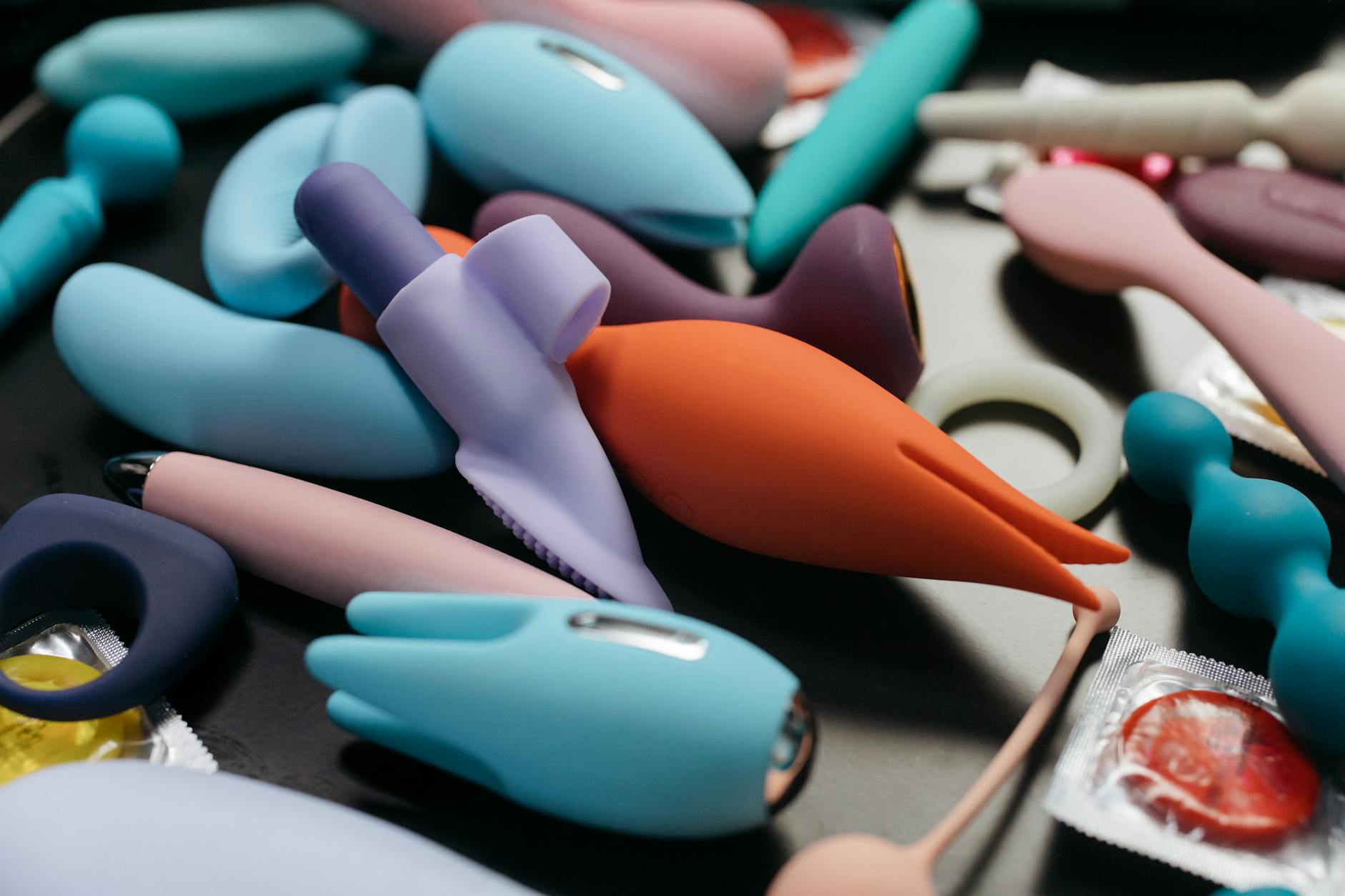
The quiet part nobody says out loud
You and your partner stopped talking about sex before you stopped having it. Now you're in the tricky middle ground where desire exists but the words don't. You're not broken. This is actually one of the most common patterns I see in couples therapy, and it's fixable.
Here's the thing. Many couples assume that using a toy together means you suddenly have to have "the talk." You don't. Sometimes the tool itself becomes the conversation.
Why communication breaks down around pleasure
Three reasons this happens more than people admit:
Shame creeps in early. One partner mentions a desire, the other responds with silence or dismissal, and suddenly the topic feels too risky to bring up again. The message gets encoded as "this isn't safe to talk about here."
Pleasure became transactional. Over years together, sex becomes another task on the list. When it stops being playful, it becomes harder to ask for what you actually want without it feeling like criticism or demand.
You're both assuming the other already knows. This is the cruelest assumption in long-term relationships. You think your partner should know what you want. They think you should know what they want. Both of you go quiet, hoping the other will figure it out.
None of these problems are solved by talking harder. Sometimes they're solved by stepping out of the conversation and back into sensation.
How a clitoral vibrator creates permission
I recommend a tool like the Lem vibrator for couples in communication breakdown because it does something words can't: it says "this is about pleasure, not performance." It says "we're trying something new, together."
The suction-based design of lemon vibrators works particularly well here because it's genuinely different from what either of you has been doing. It's not a threat to how you've had sex before. It's not a judgment. It's a door.
When you introduce a new sensation that's untethered from your old patterns, something shifts. You're both learning together. You're both discovering something. That's not the same as one person asking for something they think the other is withholding.
The actual steps for couples in communication freeze
Start alone first. Yes, this might feel counterintuitive, but here's why it matters. You need to know what the tool does for you before you introduce it to your partner. Spend 15 minutes alone with the lem vibrator. Feel how the suction works at different intensities. Notice what your body responds to. This gives you confidence and also gives you something true to say later: "I tried this and I liked how it felt."
Frame it as curiosity, not criticism. When you're ready to show your partner, the opening matters. "I found this thing I want to try with you" is different than "I need something better" or "I've been feeling disconnected." Keep it about the object and the sensation, not about what's been missing.
Use it together without pressure. The first time, just hold it. Touch it. Let your partner hold it. Feel the vibration on their hand. Talk about the sensation. "That's kind of intense" or "That feels nice." Low stakes. Low performance pressure. This isn't about orgasm yet.
Let sensation become the conversation. Once you're both comfortable with the tool, use it on each other. Not as "foreplay" in the old mechanical sense, but as genuine exploration. Ask, "How does this feel?" and actually listen. Notice what your partner responds to. This is communication. It's just happening through touch instead of words.
Why this works when talking doesn't
When couples are in communication breakdown, they're often locked in a painful loop. One person feels rejected. The other feels pressured. Both feel misunderstood. Words at that point just reinforce the fracture.
But pleasure is a different language. It's honest. Your body doesn't lie about what feels good. When you're both paying attention to sensation instead of fighting about feelings, something releases. You remember that you actually like each other.
I've seen this shift happen in a single session with the right tool and the right frame. Not because toys solve relationship problems. But because sometimes your body needs to lead where your words are stuck.
What to do if your partner resists
Resistance usually means fear, not rejection. Common fears I hear:
"Am I not enough?" This feels like you're saying they've failed. Here's the truth to offer: "I want more of you, not less. I want us to explore together. This isn't about you. It's about us both feeling good."
"It's weird or uncomfortable." Fair. New is uncomfortable. Acknowledge it. "Yeah, it might feel awkward at first. That's okay. We can go slow." Start with the tool on you while they watch. No performance. Just you experiencing pleasure. That visual often shifts the resistance.
"I'm worried about comparison." This is real. They're worried they'll be measured against a machine. You can say: "A toy isn't competition. It feels different. You feel different. I want both."
If your partner is still resisting after you've named the fear, it might be pointing to something deeper in the relationship that needs a different kind of attention. That's when a couples therapist matters more than any tool.
Building the conversation after intimacy returns
Once you've used a lemon vibrator together and felt what reconnection through sensation is like, words often become easier. You've proven to each other that pleasure conversations are safe. You've had the experience of being curious together without judgment.
From there, talking becomes possible. "I really liked when you used it on me like that." "I felt close to you during that." "I want to do this again." These statements are grounded in something real you both just experienced.
This is where actual communication starts. Not from shame or deficit, but from abundance. You're building on something that felt good instead of trying to repair something that's broken.
Common stumbling blocks and how to move through them
You introduce the toy and nothing changes. Give it more than one time. Pleasure takes multiple exposures to new sensations. Your nervous system needs to settle. Try it three times before you evaluate whether it's working.
One of you enjoys it way more than the other. That's normal. You can still use it together even if you respond differently. "You seem to like this. I like watching you feel good." Pleasure doesn't have to be symmetric to strengthen connection.
Introducing the toy made the breakdown worse. This usually means the tool exposed something deeper that actually needed to be addressed. A relationship coach or therapist can help you figure out what. A toy can be a catalyst, but it isn't a cure for fundamental disconnection.
You used it once and now it feels like "that thing we did that one time." Routine matters. Use it intentionally, not as a random event. "Saturday afternoons, let's try this together." Consistency signals that pleasure with each other is a priority.
FAQ
Can a lemon clitoral vibrator actually fix a broken relationship?
No. What it can do is create a moment where you're both pursuing pleasure instead of fighting about its absence. That moment can be a doorway to reconnection. But if the relationship is broken for other reasons, the toy won't fix those. It might actually clarify what the real issues are, which is useful information.
Is it weird to use a vibrator with a partner if we've never talked about it?
Weird is just unfamiliar. It might feel awkward the first time. That's different from wrong. Most couples feel some initial awkwardness, and it passes quickly once sensation starts. The key is framing it as exploration, not performance.
What if my partner thinks using a lemon sucker means I'm not satisfied with them?
That fear is common, and it deserves a direct answer. You can say: "I want to feel good with you. This helps me feel good. That's not about you being insufficient. It's about us both enjoying this more." Sometimes showing them how good it feels on them helps too.
Should we use it as part of foreplay or during sex itself?
Both work. Some couples use it at the beginning to warm up together. Others use it during sex as part of the experience. There's no right way. Do what feels good and what your nervous systems can handle. Start slow and build.
How do I bring this up without it feeling like rejection of my partner?
Lead with curiosity, not critique. "I read about this and I'm curious about trying it together" is different from "We need to fix our sex life." Keep it about the object and the sensation, not about what's been missing in your partner.
What if using a lem vibrator together makes us both realize we want very different things sexually?
That's useful information. It's better to know this than to stay guessing. From there, you can decide whether that difference is something you can work with together, or whether it points to a deeper incompatibility. Either way, you're working with truth instead of silence.
The real outcome
I'm not going to promise that a lemon vibrator fixes communication breakdown. But I've watched it restart conversations that had gone quiet for years. I've watched couples remember why they chose each other. I've watched pleasure become a language they could speak together again.
Sometimes the body knows how to reconnect before the mind does. When words are stuck, sensation can unstick them. That's not magic. That's just neurobiology and the radical power of saying yes together.