When orgasms disappear (and why that happens)
Let's be real. You used to come. Maybe easily. Maybe reliably. Now you don't. Or if you do, it feels like watching someone else's experience through frosted glass. Small. Distant. Not worth the 20 minutes of work anymore.
This is one of the most common things I hear, and almost nobody talks about it because the cultural script is still "orgasms are easy for women." They're not. Not always. Not for everyone. And when they stop working, the panic that follows can actually make them harder to find.
Here's what's actually happening:
The neurology of anorgasmia and numbness
An orgasm is a coordinated event in your nervous system. Your brain needs to receive sensation input, process it, filter it through arousal, and then trigger a release. If any part of that chain breaks, the whole sequence stalls.
There are about five common culprits:
Neurological fatigue. If you've been using the same stimulation for years, your nervous system adapts to it. The nerves that detect that specific pattern of touch get less reactive. You need either different stimulus, more intensity, or a change in rhythm to wake them up again.
Medication effects. Antidepressants, birth control, blood pressure meds. They're worth taking. They also mess with arousal, sometimes for the duration you're on them. Some people find their orgasms come back once they adjust. Others need to actively retrain their nervous system while medicated.
Hormonal shifts. Estrogen, progesterone, testosterone. When these drop, the tissue around the clitoris gets thinner, nerve endings are less superficial, and sensation feels duller. This is common as people age, after certain birth control changes, or during the luteal phase of your cycle.
Anxiety as a gatekeeper. Your sympathetic nervous system (fight-or-flight) and parasympathetic nervous system (rest-and-digest) can't both be fully active at once. Anxiety kills parasympathetic tone, which kills arousal. The harder you grip for an orgasm, the more your body locks up. It's a physical response, not a psychological failure.
Disconnection during penetration or partnered sex. Some people can come alone but get stuck when someone else is involved. That's not dysfunction. That's a sensory overload or attention mismatch. Your brain is divided, and the clitoris stops getting the clean input it needs.
Why breakthrough feels important
Missing orgasms isn't just physical. It rewires your relationship with your own body. After a few months of nothing, you start believing the absence is permanent. You stop trying. The anticipation of failure becomes stronger than the hope for success. Your nervous system learns that pathway is closed.
The good news. It's not closed. It's dormant. And the right tool can reopen it fast.
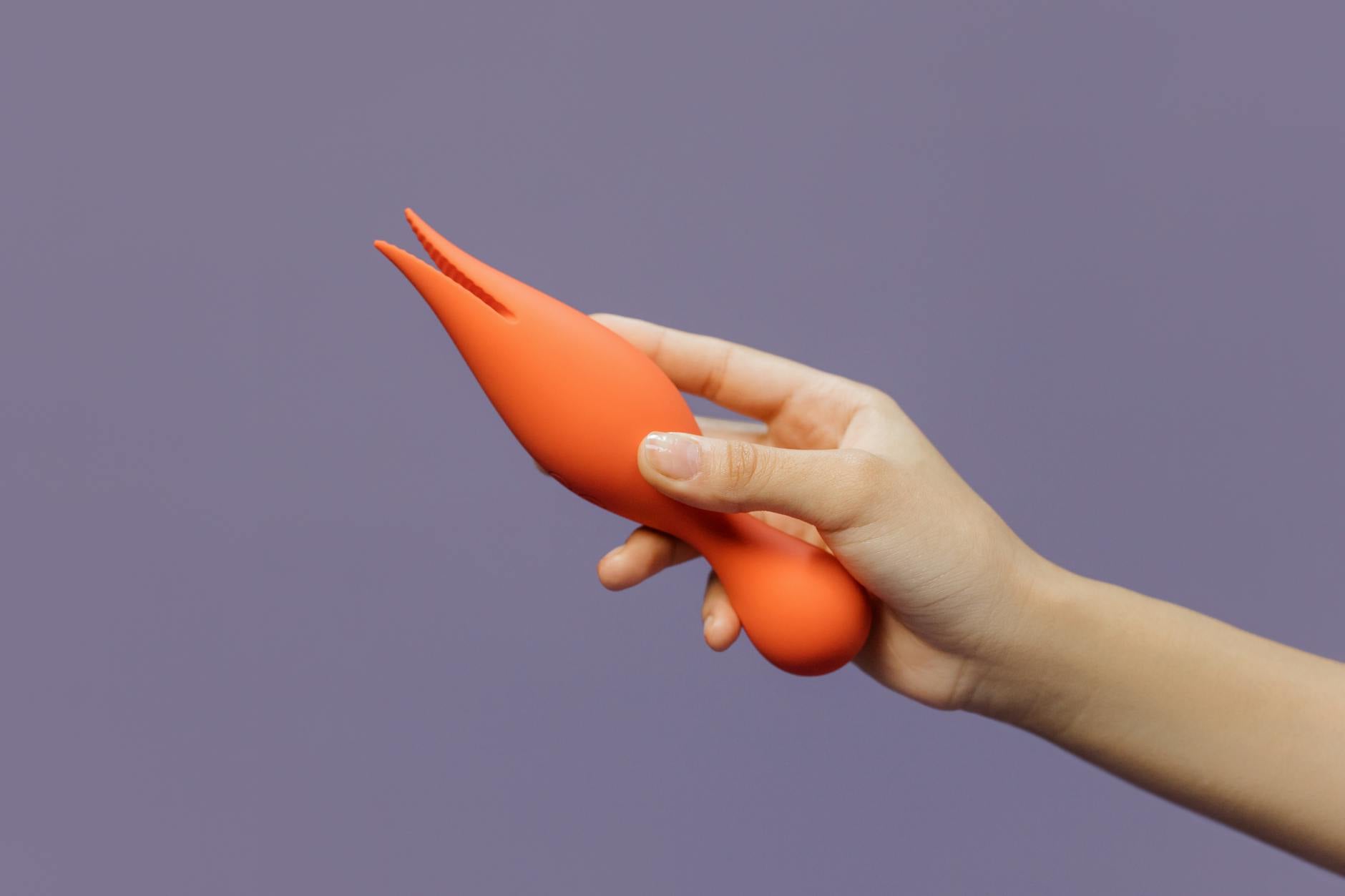
How a lemon clitoral vibrator resets sensation
A lemon vibrator works through rhythmic pressure and suction, not just vibration. Here's why that matters for anorgasmia:
It bypasses adaptation. Because suction and pulse patterns are different from manual stimulation, your nerve endings experience them as novel. Novel input wakes up your nervous system faster than familiar touch ever could.
It delivers consistent intensity without fatigue. Your hands get tired. A toy doesn't. When your nervous system is struggling to find the signal, consistency matters. The Lem clitoral vibrator keeps the same pattern going long enough for your brain to lock onto it.
It concentrates sensation precisely. The suction cup targets the clitoris without diffusing stimulation across a wider area. When numbness is the problem, precision beats diffuse touch. You're giving your nervous system a clear signal to process.
It changes the cognitive load. You're not performing. You're not managing a partner's experience. You're not worrying about how you look or how long it's taking. Your full attention can go to feeling.
The reset protocol: how to actually use it
If orgasms have been missing for a while, your nervous system needs a structured re-entry. Here's the sequence that works:
Week 1: Sensation without pressure. Use the Lem on pattern 1 or 2 (the lowest settings) for 10 minutes every other day. Don't try to come. The job is to reintroduce stimulation without the goal. Your nervous system needs to remember that the sensation exists and feels okay.
Week 2: Arousal building. Now add actual arousal context. Time when you're already feeling present and wanting pleasure. Use patterns 3-4 for 10-15 minutes. You're teaching your brain that arousal + this stimulation = good feelings. Still no pressure for climax.
Week 3: Intensity exploration. Move to patterns 5-7 for 15-20 minutes across 2-3 sessions. This is where you're testing whether your nervous system is waking up. Some people feel the first sign of something building this week. Others take longer. Either is fine.
Week 4 onward: Sustained sessions. Use the intensity that feels good for 20-30 minutes, as many times a week as you want. Orgasm may come. It may not. But something will be shifting. The point is consistency and gentleness, not performance.
What gets in the way (and how to move around it)
"It doesn't feel like real sensation." That's often how things feel at first when you're numb. Keep going. Sensation returns in layers. The first layer is usually pressure, then warmth, then the actual pleasure. You're probably on layer one.
"I'm getting closer but then I hit a wall." That wall is usually anxiety or a habitual block. If you feel the buildup stopping, pause the toy, take three deep breaths, and restart at a lower pattern. You're retraining your nervous system to trust the sensation, not to push through it.
"Nothing's happening after two weeks." If you're on antidepressants, recovery may take 4-6 weeks. If it's hormonal, the same. Give it more time. If you're genuinely stuck, a conversation with your doctor about whether your current medication is the right dose or type is worth having.
"My partner wants to help but I need to do this alone first." Say that clearly and early. You're not rejecting them. You're rewiring your nervous system. Once breakthrough happens, partner exploration is easier. Trying to do both at once adds pressure.
When to reframe the goal entirely
Sometimes breakthrough doesn't mean going back to how orgasms felt at 25. That's not the loss here. The real goal is feeling pleasure again. That might look like smaller, more subtle sensations. It might look like longer pathways to climax. It might look like different types of pleasure altogether.
I've worked with clients who discovered that after months of nothing, their breakthrough wasn't a traditional orgasm. It was warmth. It was a sense of aliveness. It was their body responding again. That counts. That's the breakthrough.
People also ask
How long does it take to have an orgasm again with a clitoral vibrator?
It depends heavily on what caused the numbness. If it's medication-related, expect 4-8 weeks of consistent use. If it's pure neural adaptation from years of the same stimulation, 2-3 weeks often does it. If it's trauma-related or deeply entrenched anxiety, it might take 2-3 months of patient, pressure-free exploration. The common thread: consistency matters more than intensity.
Can I use a lemon vibrator if I'm on antidepressants?
Absolutely. One of the side effects of SSRIs and SNRIs is delayed orgasm or anorgasmia. It's not your failure. It's the medication doing its job on your serotonin reuptake. A clitoral vibrator can actually help your nervous system find sensation pathways that the medication hasn't flattened. Some people find their breakthrough happens faster with external stimulation than without.
What if my partner is frustrated that I'm not coming?
That frustration often makes the problem worse. What helps: frame it clearly as a nervous system recalibration, not a rejection of them. Set a timeline ("I'm giving this 4 weeks without pressure"). Suggest they explore other forms of intimacy while you're resetting. If they can't respect that boundary, that's separate relationship work worth addressing. For support, read about how to rebuild intimacy after relationship conflict.
Is it normal to feel numb even during masturbation?
Yes. Numbness that extends to solo pleasure isn't psychological. It's physiological. Could be hormonal, medication-related, or pure neural adaptation. A lemon clitoral vibrator is a smart reset tool precisely because it offers a different input than your hand has been giving. If numbness persists even with different stimulation, checking in with a doctor about hormones or medication side effects is worth doing.
Can anorgasmia come back after I've felt a breakthrough?
It can if the underlying cause returns (medication changes, hormones shifting, stress spiking). But now you know how to reset it. You have evidence it's possible. That matters psychologically. Keep the Lem around. Use it periodically even when things are working fine. Your nervous system stays more resilient when you vary stimulation.
What if I'm used to needing a lot of intensity to feel anything?
Sensation often returns in reverse. Start at the lowest patterns and let your nervous system gradually rebuild its receptivity. If you jump straight to high intensity, you might overshoot and trigger numbness again. The reset works because you're meeting your nervous system where it is now, not where it used to be.
The real point
Orgasms are negotiable. Your capacity for pleasure isn't. When breakthrough feels impossible, it usually means your nervous system needs different input, better conditions, or just time. A lemon clitoral vibrator gives you all three. The key is patience and the commitment to showing up without performance pressure. That's where the rewiring actually happens. If you're struggling with broader intimacy challenges alongside this, reconnecting after a long absence might also help.
Your pleasure matters. Your body deserves to feel alive again. And breakthrough doesn't have to look like it did before. It just has to be real.