
Let's talk about the gap
There's a version of you that used to touch herself regularly. Maybe she had a favorite vibrator. Maybe she and a partner explored things together. Then life happened. Stress, health stuff, relationship shifts, grief, exhaustion, body image struggles, medication changes. The reasons are always valid. And now you're here, curious but maybe a little nervous about whether things still work the same way, whether you remember what turns you on, whether your body will cooperate.
Here's what I tell clients: your pleasure potential didn't go anywhere. It's still there. You're just relearning the language.
Why a long break changes how your body responds
When you haven't engaged sexually for months or years, several things shift simultaneously. First, there's the physiological reality. Your pelvic floor muscles, when understimulated, become less flexible and responsive. Blood flow to your genitals decreases without regular arousal. Vaginal lubrication responds more slowly because your body has essentially recalibrated what it needs to focus on.
Second, there's the psychological layer. Your nervous system has learned that sex isn't a priority. That's not judgment; it's just what happens. If you spent two years managing anxiety or grief or taking medications that flattened desire, your brain internalized the signal that pleasure was optional. Restarting means gently telling your nervous system that it's safe to pay attention again.
Third, and this matters: you're not the same person you were before the break. Your body has changed. Your preferences might have shifted. Your communication style with yourself and partners is different. That's not loss; that's information.
Start with solo time, not performance
This is non-negotiable. Before you involve a partner or commit to any specific outcome, you need to remember what your own arousal feels like in a space with zero pressure.
Set aside at least 20 minutes when you're alone, unrushed, and your nervous system is genuinely relaxed. Not tense. Not performing. This is reconnaissance, not a test.
Start without a lemon vibrator. Use your fingers. Pay attention to what textures feel good where, how much pressure you prefer, whether you like direct clitoral stimulation or prefer the sensation along the sides. Notice your breathing. Notice whether certain thoughts or fantasies show up naturally or whether your mind stays blank.
Don't judge any of it. Some people restart with immediate sensation; others need five or six sessions before arousal feels familiar again. Both are normal.
Introducing the lemon vibrator gradually
Once you've had solo time without toys, introduce your lemon clitoral vibrator or one of Hello Nancy's other options like the Berri or Uno. Here's the framework I recommend:
Session one: Observation only. Turn it on at the lowest setting. Don't put it on your body yet. Hold it in your hand. Feel the vibration. Let your brain familiarize itself with the sensation without expectation. Five minutes is enough.
Session two: External exploration. Turn it to the lowest pattern. Apply it to the outer labia, your thighs, anywhere around the genitals except directly on the clitoris. This is teaching your body that the sensation is safe and building anticipation. Spend 10-15 minutes here.
Session three: Direct but brief. At the lowest setting, apply the lemon vibrator or another clitoral vibrator to the tip of your clitoris for 30 seconds. Stop. Notice how you feel. Rest. Repeat two or three times in a session. You're not trying to climax. You're building responsiveness.
Session four and beyond: Extended play. Now you can spend longer with direct stimulation if it feels good. You can experiment with patterns and intensity. You can explore what edges feel good without crossing into overstimulation.
The reason for this slow build isn't about being prudish. It's neuroscience. Your nervous system, when it's been in a low-arousal state for a long time, needs gradual recalibration. Jumping straight to high intensity can actually feel overwhelming or even painful.
What to expect physically
Your clitoris might feel extra sensitive at first. That sensitivity should ease as you practice more regularly. If it doesn't, or if you experience pain, it's worth checking in with a doctor who understands sexual health.
Lubrication might take longer to build. That's normal after a long break. Using a water-based lubricant isn't a sign something's wrong; it's smart preparation. Many people find that consistent practice brings natural lubrication back within three to four weeks.
Orgasms might feel different than you remember. Softer, stranger, delayed, more localized, more full-body. Your nervous system is rebuilding these pathways. The sensation you had before isn't coming back because the person having it has changed.
The mental piece (which is actually bigger than the physical one)
Your brain is part of the equation. If you've been disconnected from your sexuality for a long time, shame often lives in that space. You might feel embarrassed about the gap, or worried that you "should" be further along, or nervous that your body is broken.
None of that is true, and you deserve better thought patterns. Here are reframes that work:
Instead of "I'm rusty" try "I'm learning what my body needs right now."
Instead of "I should be able to orgasm by now" try "I'm building a new relationship with my body."
Instead of "My body is broken" try "My body is responding exactly as it should after a break."
These aren't affirmations. They're accurate descriptions of what's actually happening. Your body isn't broken. It's learning again.
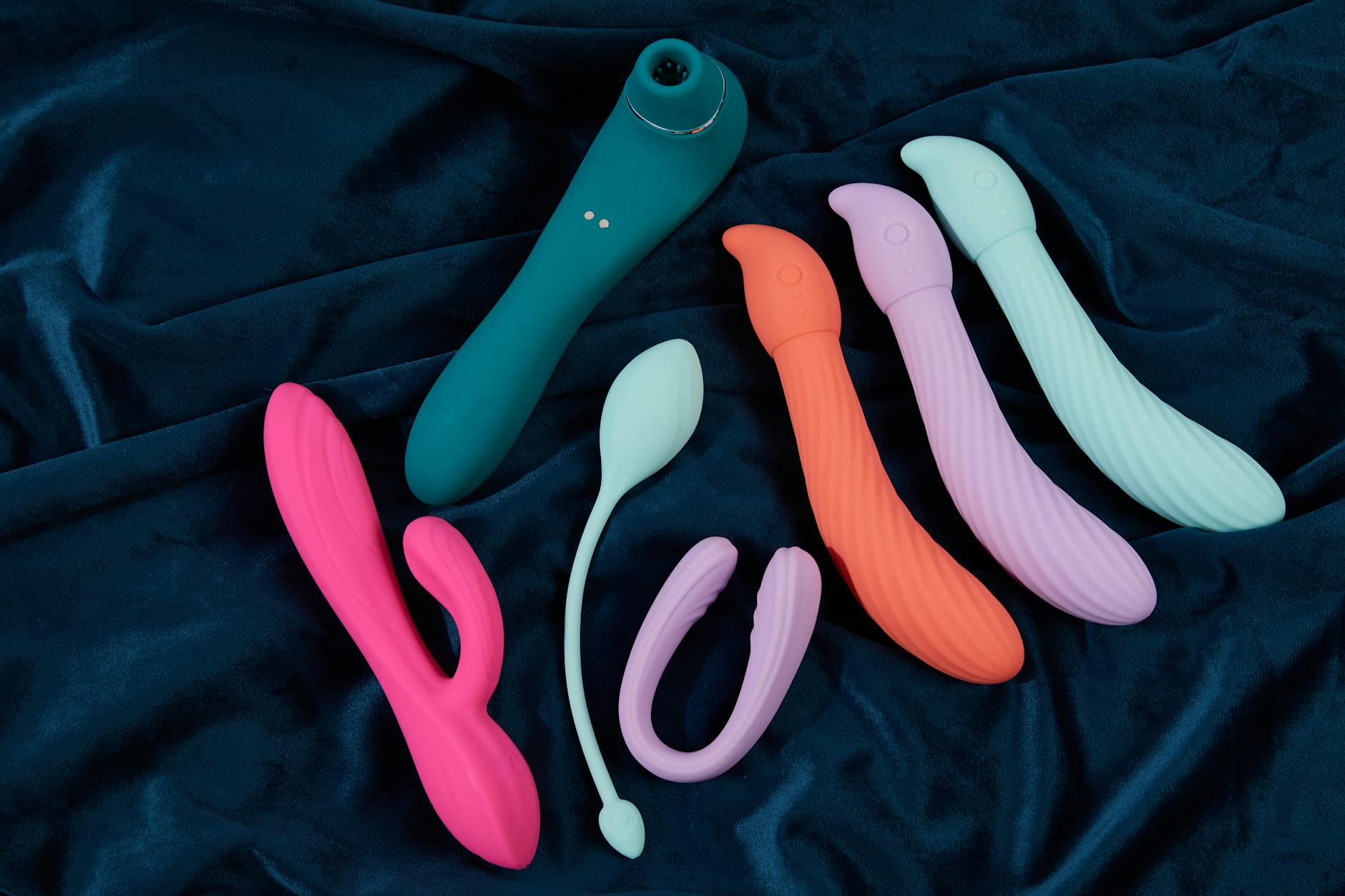
Photo by IFONNX Toys on Pexels
If you have a partner, here's the conversation to have
If you're restarting within a relationship, your partner deserves to understand what's happening and why you're taking your time. This isn't about managing their expectations. It's about building trust and aligned effort.
Tell them: I'm relearning what feels good to me. This takes time and no pressure. I want to explore solo first so I can understand my own arousal without worrying about anyone else's experience.
Tell them: Here's what I need from you in terms of emotional support while this is happening.
Then, when you're ready to bring a partner back in, you can reference what you've learned. You can say, "I like direct stimulation here, but only after a long warm-up." You can show them what patterns feel good on your lemon vibrator. You can ask them to stay curious rather than reverting to old habits.
For more on this specific conversation, the guide on how to use a lemon vibrator with a partner walks through the exact framework that helps couples navigate this transition without tension.
The timeline (there isn't one)
Some people regain their sexual confidence in three weeks. Others take three months. A few take longer. The speed doesn't correlate with how long the break was or how much someone wants it. It correlates with nervous system regulation, stress levels, any underlying health changes, medication effects, and plain neuroplasticity.
If it's been six months and you're seeing improvement, you're on track. If you plateau at month two, that's information. It might mean you need to check in about sensitivity levels or explore different patterns. It might mean something else is taking your nervous system's bandwidth. Both are fixable.
When to get support
If pain shows up during any of this, don't white-knuckle through it. That's a signal to talk to a pelvic health physical therapist or a gynecologist who specializes in sexual health.
If shame or trauma memories surface, a therapist trained in sex-positive care can help you process that without judgment. There's no prize for suffering through this alone.
If you're experiencing mood changes, significant fatigue, or loss of interest in things you normally enjoy, check in with your doctor. Sometimes the reason for the sexual break was something medical that's still present and needs attention.
You're not starting over; you're continuing
A long break in your sexual life doesn't erase your capacity for pleasure. It doesn't reset you to age 16 and inexperience. You're an adult who knows herself better than she did before, even if the knowledge has gone dormant.
Your body remembers. Your nervous system recalibrates faster than you'd think. And your lemon vibrator is just a tool to help you bridge the gap between where you were and where you want to be.
Give yourself permission to take the time this deserves. Your pleasure matters.
People Also Ask
How long does it typically take to regain normal sexual response after a long break?
Most people notice improved responsiveness within three to six weeks of consistent solo practice, but "normal" is personal and contextual. After six months without sexual engagement, your nervous system needs time to recalibrate blood flow and sensitivity. Physiologically, pelvic floor muscles recover function faster than you'd expect. Psychologically, rebuilding comfort and confidence takes longer. If you're at three months with no improvement, that's worth exploring with a healthcare provider.
Can anxiety about restarting actually make it harder to feel pleasure?
Absolutely. Your brain is a sexual organ too. If you're anxious about whether things will work or whether your body is "broken," your nervous system stays in a low-arousal state and actually inhibits natural lubrication and clitoral blood flow. This isn't a psychological failure; it's how your autonomic nervous system works. Reducing expectation and focusing on sensation rather than outcome helps dramatically.
Is it normal for my clitoris to feel extra sensitive after a break, or does that mean something's wrong?
Extra sensitivity is common and usually temporary. Your nerve endings haven't been stimulated in a while, so initial contact can feel almost surprising or even slightly painful. This typically settles within a few sessions. If sensitivity persists or worsens after two weeks of regular practice, check with a gynecologist to rule out any underlying changes like hormonal shifts or nerve involvement.
Should I use a lemon vibrator right away, or is it better to start with my fingers?
Start with your fingers. You need to remember what your baseline arousal feels like and what kind of pressure feels natural. Once you've had three or four solo sessions and understand your preferences, introducing a lemon clitoral vibrator at the lowest setting gives you a new sensation to work with. The Hello Nancy lemon vibrator and other models are fantastic tools, but they're most useful when you've got a baseline to compare them against.
What if nothing feels good, even after weeks of trying?
That's not failure; that's information. It could mean several things: you need more time, there's an underlying medical factor (hormonal changes, medication effects, vascular issues), or there's unprocessed shame or trauma affecting your nervous system. Any of these is worth discussing with a sexual health specialist or therapist. You're not broken, and there's always something that can help.
Can I use a lemon vibrator if I'm on antidepressants or other medications that affect libido?
Yes, and many people find that a vibrator actually helps navigate these side effects. Some medications do genuinely lower desire or sexual response. A lemon vibrator can't override medication, but it can provide enough physical stimulation to help you access pleasure in ways that solo touch might not. If medication has changed your responsiveness significantly, worth mentioning to your prescriber, but most sexual side effects are manageable with patience and the right tools.
If you're ready to pick a tool, the Hello Nancy collection offers lemon vibrators and other clitoral vibrators designed with varying intensities and patterns. Whether you're exploring sensation for the first time in years or coming back to something familiar, having the right device makes the process feel less daunting. Your pleasure matters, and restarting is worth the time and patience you give it.