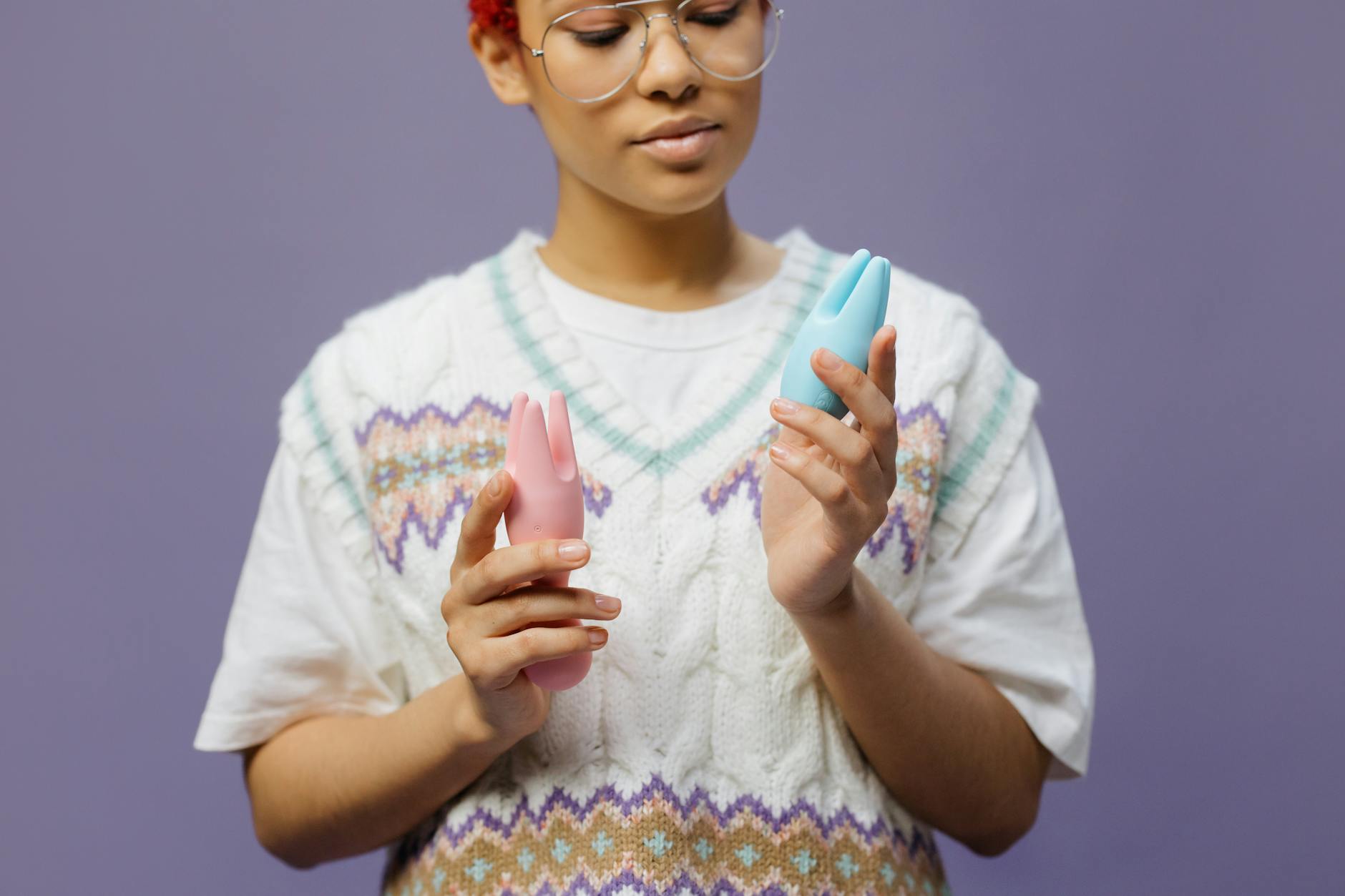
Let's talk about the arousal speed problem
One of you is ready to go within minutes. The other needs a slow build. One feels pressure when the other is clearly done warming up. One gets bored during the waiting. One feels rushed. Sound familiar?
This isn't a compatibility problem. It's a mismatch that every couple either has or will have at some point, and it's wildly fixable. The trick isn't forcing the slower person to speed up or asking the faster person to manufacture patience they don't feel. The trick is building a shared experience where both speeds are working together instead of against each other.
A lemon clitoral vibrator changes the equation.
Why arousal speed differences happen
Your body isn't choosing to be slow or fast. It's responding to neurology, hormones, stress, medication, and sometimes just the day you're having.
People with vulvas on average take longer to reach arousal than people with penises. But within that, there's wild variation. Some vulva-owners warm up in five minutes. Some genuinely need thirty or more. Some penis-owners take forever. Some are ready instantly. The research shows less difference between genders than between individuals.
What matters is this: when one partner needs significantly more time than the other, resentment builds fast. The faster person feels bored or rejected ("Do I not turn you on?"). The slower person feels pressured and self-conscious ("Why can't I just get there?"). Neither of you is wrong. You're just on different timelines, and that timeline gap is silently poisoning the experience.
The lemon vibrator as a bridge, not a replacement
Here's what I see couples get wrong first. They think a clitoral vibrator is meant to speed up the slower partner. It's not. It's meant to create a shared experience where both partners are actively engaged while arousal is happening at its own pace.
Think of it this way: if you're the faster arouser, a lemon vibrator gives you something to do while your partner is warming up. If you're the slower one, it helps you get there on your own timeline without feeling like you're holding someone back. Both of you are present, both of you are touching, both of you are building something.
The vibrator is permission to stop pretending arousal is synchronized.
Practical timing strategies
Start together, not simultaneously. Kiss, touch, build some baseline connection for five or ten minutes. Then introduce the lemon vibrator when it makes sense. You don't need to be equally aroused yet. You just need to be willing.
Whoever's faster can use it solo first. If you're the one who gets ready quickly, use a lemon clitoral vibrator on yourself while your partner is still warming up. This isn't selfish. This is honest. You get pleasure, they get to watch (if you're comfortable), and they know you're not bored or resentful. Pressure drops immediately.
Alternate who's receiving. Some couples do round-robin. You get five or ten minutes with the vibrator while your partner touches you or themselves. Then you switch roles. This keeps both people active, both people focused, and removes the sense that one person is performing while the other watches.
Use it as a foreplay extender. The slower-arousing partner doesn't have to come from the vibrator alone. They can use it while doing other things. Penetration, manual stimulation, kissing, whatever your dynamic is. The vibrator becomes one tool in a longer, more complex interaction instead of the main event.
Managing the emotional layer
Speed differences almost always carry emotional baggage. The faster person worries they're too much. The slower person worries they're broken or not desirable. Neither worry is true, but both are real.
When you introduce a lemon vibrator, name what's actually happening. "I want to use this so we're both getting pleasure while you warm up" is wildly different from introducing it silently or apologetically. The first one is matter-of-fact. The second one sounds like a workaround for a problem.
There's no problem. You're just different.
If you're the slower arouser, the permission to take your time without guilt matters more than the vibrator itself. Some partners will need to hear this multiple times. "I'm genuinely not bored. I like watching. I like knowing you're enjoying yourself." If your partner isn't capable of saying this or meaning it, that's a different conversation. But most partners, once they understand there's a tool that actually works, feel relieved.
The specific moves that help
With a lemon clitoral vibrator, start on the gentlest setting. If you're the faster arouser using it, you know your body. Go for what works. If you're the slower one, treat it as another form of touch, not a shortcut to intensity. Many people find that suction-based stimulation (which a quality clitoral vibrator provides) feels less jarring than traditional vibration, especially if you're still warming up.
Don't aim for orgasm as the goal during this warming-up phase. Aim for connection and pleasure without pressure. An orgasm might happen. It might not. Both are fine.
One specific move: the slower arouser can use the vibrator while the faster one uses their hands or mouth elsewhere. This creates a blended experience where you're sharing sensation but respecting different intensities. You're not watching someone wait. You're both active.
What changes over time
Honestly, some couples find that once arousal gaps are de-pressurized, the gap itself shrinks. When the slower person isn't stressed about holding their partner back, their arousal actually comes faster. When the faster person isn't resenting the wait, patience becomes easier.
Other couples stay exactly as they are, and that's fine too. The point isn't to fix the difference. The point is to stop treating it like a problem that needs solving.
When to reassess
If the gap feels like it's creating ongoing resentment or avoidance, that's a signal you might need a bigger conversation or even a couples therapist. Arousal mismatches are normal. Persistent avoidance of sex because of them isn't.
If one person consistently feels pressured or the other consistently feels bored, the lemon vibrator alone isn't the answer. You're working with a deeper dynamic that needs attention.
But if you're willing to name the difference, get creative about timing, and use a tool that works with both your bodies instead of against them, this is wildly solvable.
FAQ: Mismatched arousal and lemon vibrators
How do I introduce a vibrator to my partner without making it weird?
The weirdness lives in the silence. Say it plainly: "I want us both to enjoy ourselves, and I know we warm up at different speeds. I'm thinking about getting a lemon clitoral vibrator so we can both be present without anyone feeling rushed." Most partners respond with relief. You're solving a problem they've felt too.
Can using a vibrator make my partner feel like I don't enjoy them as much?
Not if you frame it right. A vibrator isn't replacing them. It's a tool you're using alongside them, while they're touching you or you're touching them. You're adding something, not substituting. The proof is in your presence and attention.
What if my partner thinks using a vibrator means I'm not aroused by them?
That's a conversation that might go: "I'm aroused by you. My body also has its own timing. This vibrator helps us meet somewhere in the middle without either of us feeling pressured." If your partner can't accept that, the vibrator isn't the real issue.
Is it okay to use a lemon clitoral vibrator solo while my partner watches?
Completely. In fact, this can be hot for both people. The watching person gets to enjoy themselves or touch themselves. The person using the vibrator gets to explore without performance pressure. It's a shared experience, not a solo one happening in front of someone.
How do I know if a vibrator is actually helping or just masking the real problem?
If your arousal speeds are different but you genuinely like each other and want each other, the vibrator helps. If your arousal gap is a symptom of deeper disconnection or resentment, the vibrator is a band-aid. Pay attention to whether you feel closer afterward or just less awkward.
Should we use the same vibrator or get two?
Personal preference. Some couples love sharing. Some prefer their own. A quality lemon clitoral vibrator is an investment either way, and one device can absolutely serve both people. If you're buying one to start, make sure it works for the slower arouser's needs specifically, since they're the one whose arousal experience is most directly affected.
The real goal here
Mismatched arousal speeds aren't a design flaw in your relationship. They're just physics. Bodies warm up differently. A lemon vibrator bridges that gap by giving both of you something active to do while arousal is happening on its own timeline.
The couples who handle this best aren't the ones with matched speeds. They're the ones willing to acknowledge the difference, get creative about solutions, and keep showing up for each other. A good tool helps. But the real work is the honesty.