Let's talk about what birth control actually does to your body
Hormonal birth control doesn't just prevent pregnancy. It rewires desire, sensitivity, and how your body responds to touch. Starting a new pill, switching methods, or stopping hormonal contraception altogether triggers a cascade of changes—some obvious, some sneaky—that affect your whole sexual experience.
The tricky part? No one tells you this happens. You're supposed to just... keep doing what you did before, right? Except your body is running a different chemical program now, and what used to work stops working the same way. That's not failure. That's biology.
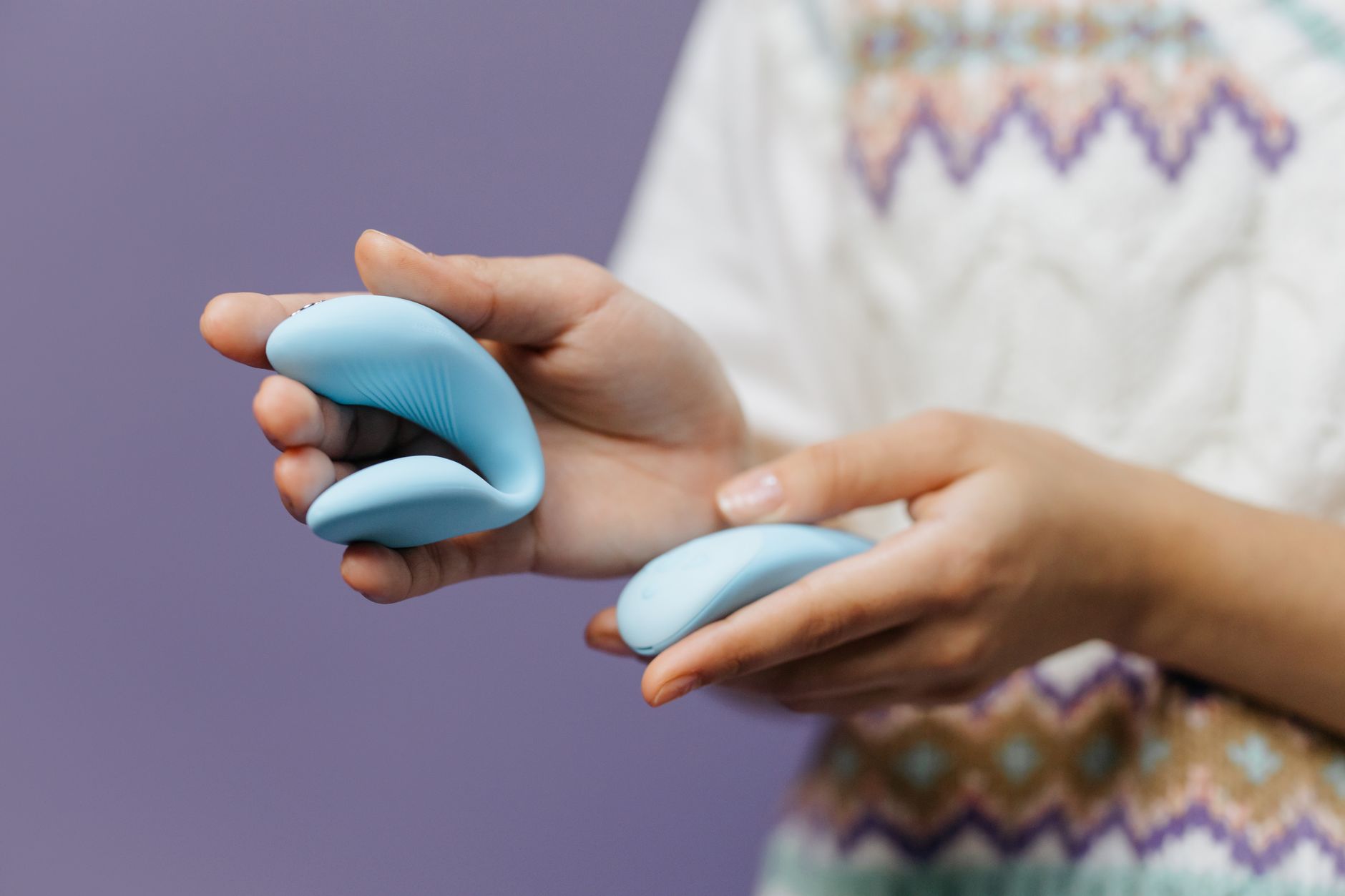
Here's what changes, and why a lemon clitoral vibrator becomes particularly helpful when you're navigating it.
How hormonal birth control rewires arousal
Hormonal contraceptives suppress ovulation by flooding your system with synthetic hormones. This does two major things to your sexual response:
First, they lower the peak of testosterone that normally spikes in the weeks leading up to ovulation. Testosterone isn't just a male hormone—people with vulvas make it too, and it's the primary driver of sexual desire. When it's suppressed, desire often flatlines or shifts in ways that feel confusing. Some people experience this as "I don't want sex anymore." Others feel it as "I want it, but I don't feel excited about it the way I used to."
Second, hormonal contraceptives change blood flow patterns. The synthetic hormones affect how much blood reaches your genitals during arousal, which changes sensation and how quickly you build to orgasm. The tissues respond differently. Touch that felt amazing on your previous contraceptive might feel too intense or not intense enough on a new one.
The tissues themselves also change—estrogen levels affect tissue thickness and lubrication—so the whole mechanical experience of sex or solo play feels foreign in ways that have nothing to do with your desire or your relationship.
Why suction vibrators work better during these transitions
Traditional vibrators rely on speed and friction. When hormonal shifts make your tissues more sensitive, more delicate, or when sensation feels dulled, a powerful vibrator can feel jarring or, conversely, too subtle to register.
Lemon clitoral vibrators use suction technology instead. Rather than hammering away at the same frequency, a lemon sucker creates a gentle seal and pulse pattern that stimulates without the same mechanical pressure. This works brilliantly when your sensitivity is in flux because suction engages the nerves differently than direct vibration does.
If your tissues are tender: suction feels gentler and more diffuse than a buzzing head.
If sensation feels numb: suction creates a rhythm and movement that some people find more engaging than straight vibration when arousal is sluggish.
If you're not sure what you want: suction gives you a different type of sensation to explore, which often helps you figure out what your body is actually responding to right now, not what it responded to six months ago.
The first 2-4 weeks after starting or switching contraception
If you've just started hormonal birth control or switched methods, your body needs time to settle. During this window, pleasure often feels... off. Muted. Weird. This is normal and temporary.
What helps:
Start slow. If you're using a lemon clitoral vibrator for the first time during a hormonal transition, begin with the lowest intensity setting. Your tissues are recalibrating, and that suction sensation might feel stronger or different than you expect.
Use lubrication even if you normally don't need it. Synthetic hormones can reduce natural lubrication, especially in the first few weeks. A quality water-based lube makes the experience smoother and lets you focus on sensation rather than friction.
Give yourself permission to need different things. You might have loved intense vibration before; now you might want something gentler. That's not weakness or lack of desire. Your nervous system is adjusting, and what your body needs right now is genuinely different.
When desire bounces back (and why it might feel strange)
After the adjustment period—usually 2-4 weeks, sometimes longer—desire often returns. But it doesn't always return the same way it left.
On some hormonal contraceptives, desire bounces back to baseline. On others, it stays lower than before you started. Some people experience desire that's lower overall but more concentrated in certain moments. Some people report that desire feels less spontaneous but more intentional—like they have to think about sex rather than want it unprompted.
If you're using a lemon clitoral vibrator as a way to rebuild arousal during this phase, you're not forcing anything artificial. You're giving your body a clear signal and letting it respond at its own pace. A good lemon sucker is particularly helpful here because you can adjust intensity as you go, which means you can match the device to whatever your body is offering that day.
Some people find that using a vibrator during a hormonal transition actually helps them re-establish their baseline desire faster. The physical stimulation can jumpstart arousal circuitry that feels dormant, especially when arousal feels like it requires more "effort" on the pill than it did off it.
If you're in a relationship, manage expectations early
Your partner might notice the shift too. Decreased frequency, changed preferences, longer warm-up times—these are visible changes, and they can feel personal if you don't name them explicitly.
The most useful conversation isn't "I'm less into you" or "something's wrong with me." It's "My body is adjusting to new hormones, and my arousal looks different right now. This doesn't mean I don't want you. It means I need something different to get there."
Then show them what that something is. Using a lemon clitoral vibrator together, or letting a partner watch you use one, can actually reset the dynamic because suddenly the conversation shifts from "something's wrong" to "here's what my body responds to now." That's powerful information, and it often brings couples closer rather than creating distance.
After stopping hormonal birth control
If you're coming off hormonal contraception, you might actually experience the reverse problem: oversensitivity. Without synthetic hormones suppressing your natural hormone cycle, your body regains its natural rhythm—and that rhythm includes testosterone spikes.
Some people find this exhilarating. Others find that sensation feels too intense, and a vibrator that felt perfect on the pill suddenly feels too strong. This is also temporary; your body needs about three months to fully recalibrate after stopping hormonal contraception.
During this window, a lemon clitoral vibrator is helpful because you can dial intensity down without losing the suction sensation. Many people also find that the wider range of sensation—from gentle pulse patterns to stronger suction—helps them re-discover what they actually like when their hormones aren't being managed synthetically.
The practical setup that actually works
If you're navigating a birth control change and want to use a lemon clitoral vibrator effectively, here's the toolkit:
Start with the essentials. A quality water-based lubricant and a lemon sucker designed for clitoral stimulation. The lube is not optional; it makes everything feel better and reduces any friction-related discomfort as your body adjusts.
Set aside time when you're not rushed. Hormonal changes often mean arousal takes longer. Give yourself 20-30 minutes, not five. Pressure kills arousal, especially when your hormones are already doing a number on your baseline desire.
Try the suction on the lowest setting first. Once you know how it feels at a baseline level, you can explore higher intensities. But starting low prevents that "whoa, that's a lot" moment that makes people write off a tool too quickly.
Keep notes if you want them. Some people track what intensity, duration, and type of stimulation actually gets them there during a hormonal transition. That information is gold—it tells you what your body is actually responding to right now, not what you think you should be responding to.
When to actually see a doctor
If your hormonal birth control is causing side effects beyond shifted desire—mood changes, depression, physical pain, or bleeding issues—talk to your prescriber. You might need a different contraceptive, a different dose, or a different method altogether.
Birth control is wildly individual. What works brilliantly for your friend might make you feel terrible. That's not a personal failing; it's just that your neurobiology doesn't match hers.
If you're using a lemon clitoral vibrator and noticing pain during or after use, that's also worth mentioning to a doctor. Sometimes hormonal changes affect tissue in ways that make direct stimulation uncomfortable; sometimes it's a sign that the particular contraceptive isn't a good fit for your body.
Here's what actually matters
Your body will adjust. The weird, muted, or overstimulated sensation you're experiencing right now is temporary. And tools like a lemon clitoral vibrator aren't band-aids for hormonal shifts—they're ways to explore what your body actually responds to during the transition, rather than trying to force it back to what it used to be.
Give yourself grace through this. Your pleasure matters, and your body's needs matter, even when they change. Especially when they change.