
The conversation nobody has before you need it
Let's be real. If you've spent years in a partnership, your body learned to respond to another person's timing, another person's preferences, another person's rhythm. That's not bad. It's just how long-term intimacy works. But when that partnership ends—whether it's sudden or slowly eroding—your pleasure goes orphaned. You're left wondering if you even know what you want anymore.
Most solo guides assume you're starting fresh at 22. You're not. You're starting from a different place entirely: you know pleasure exists, you've felt it, but you've outsourced it for so long that finding it again feels strange, maybe even guilty. A lemon vibrator isn't going to fix that. But it can be a tool that helps you remember what your own desire feels like, separate from someone else's need.
Why reentry is harder than starting out
This is the part therapists don't always say clearly. Your nervous system spent years in a duet. Someone else's presence, their breathing, their touch, their attention—it became part of your arousal blueprint. When that's gone, your brain has to relearn how to build pleasure without that external stimulus. That takes time.
And there's something else happening in parallel: you might feel guilty, weird, or selfish doing this alone. That's worth naming. After years of checking in with a partner, making sure they're satisfied, timing things around their interest, turning inward to your own pleasure can feel almost transgressive. It's not. Your pleasure is yours to own.
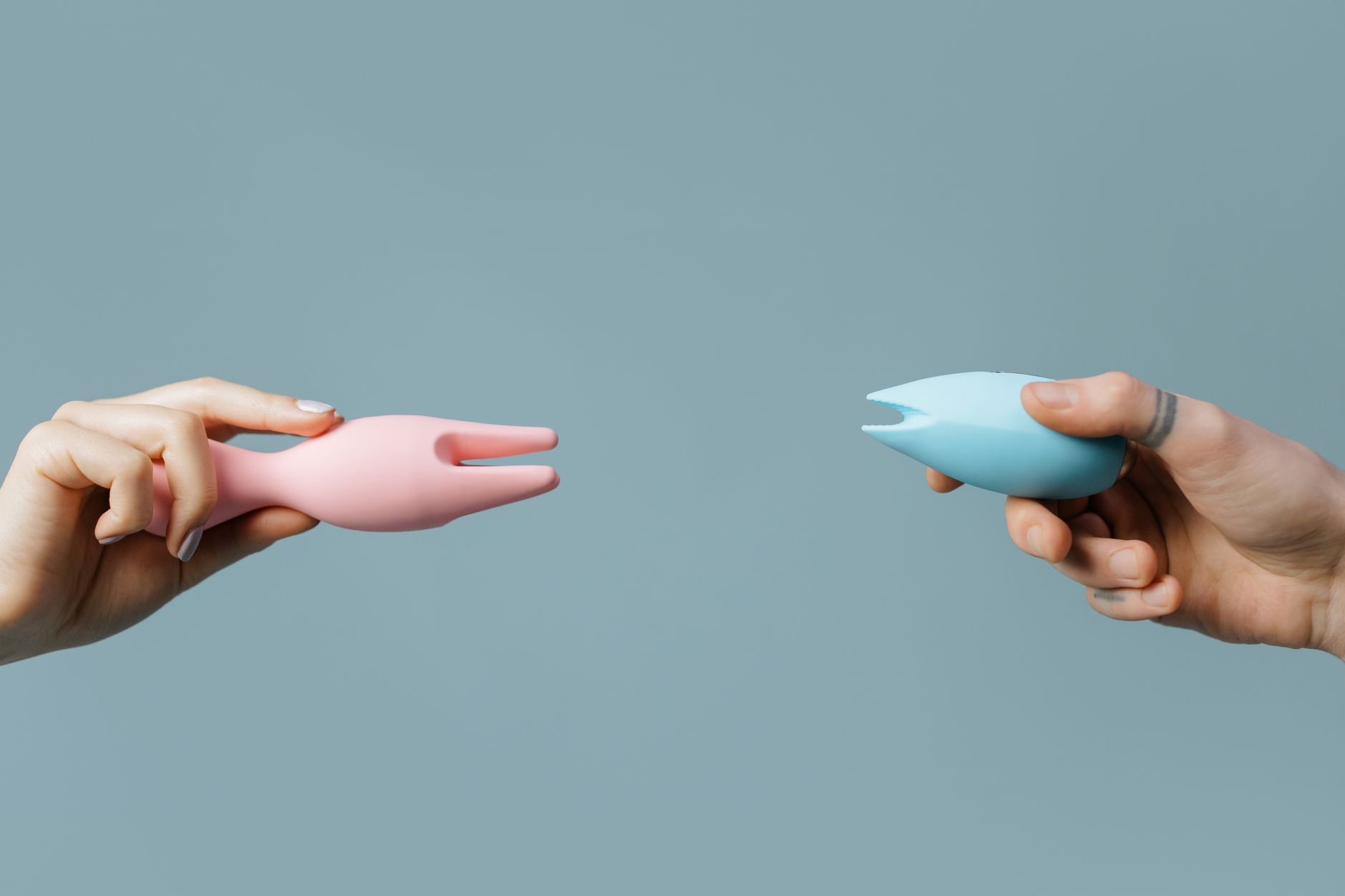
Photo by cottonbro studio on Pexels
The second-order issue is physical. After months or years of less frequent partnered sex, your pelvic floor tightens. Your tissues might be thinner if hormone levels have shifted. Your clitoris might feel less responsive. None of that means you're broken. It means your body went dormant, and dormant tissue needs waking up slowly.
Why a lemon clitoral vibrator works for this phase
A clitoral vibrator like the Lem isn't going to force anything. That's the point. It gives you control—speed, pressure, duration—in a way partnered sex often doesn't. You can start gentle. You can pause whenever you want. You're not managing anyone else's arousal or timing.
The suction mechanism on a lemon vibrator is particularly useful here because it mimics the sensation of suction without the intensity of direct vibration. If your clitoris is sensitive from disuse or hormonal changes, suction-based stimulation spreads sensation across a wider area. It's less pointed. Less demanding.
And practically: you don't have to perform. No eye contact unless you want it. No worrying whether you're taking too long. No negotiating. Just your own pace, your own pressure, your own timeline.
The setup that actually matters
This isn't about candles and mood music, though those can be nice. This is about removing friction so you can actually focus.
First, time it when you won't be interrupted. I mean really won't. Not "probably won't." Not "they might knock." You need 20 to 30 minutes where you don't have to keep one ear on the door. Your nervous system can't shift into parasympathetic (the relaxed state where pleasure happens) if part of you is on high alert.
Second, choose a space where you're physically comfortable. Not the bed if the bed is where you used to have partnered sex and that triggers complicated feelings. The couch, a chair, the floor with pillows—somewhere that feels neutral and yours. Temperature matters too. You'll want to be warm enough that you're not thinking about being cold.
Third, have water and lube within arm's reach. After a long break, your natural lubrication might be minimal. Water-based lube designed for sensitive skin is your friend here. It's not a failure of your body—it's biology. Use it.
How to start when everything feels awkward
Honestly, the first few times might feel weird. You might feel self-conscious. Your mind might wander to your ex or to whatever ended the relationship. That's not a sign you should stop. It's just your nervous system being confused about whether it's safe to turn inward like this.
Start without the vibrator. Spend five minutes just touching yourself in ways that feel good, no goal, no destination. Shoulders, chest, inner thighs, whatever. The point is to reacquaint your nervous system with the idea that your own touch feels good. That you're allowed to receive pleasure from yourself.
Once that feels less bizarre, introduce the lemon vibrator on the lowest setting. Angle it so it's providing suction rather than direct vibration. Start on your outer labia or the clitoral hood rather than the clitoris directly. Let your body adjust to what sensation feels like again.
Don't aim for orgasm on your first few attempts. I'm serious. The moment you put pressure on yourself to come, your nervous system tightens. Your pelvic floor contracts. You make it harder, not easier. Instead, aim for "noticing what feels okay." That's enough.
What you're rebuilding, and why it takes time
Your pleasure architecture got built in relation to someone else. Their touch, their pace, their attention shaped your arousal. Now you're rebuilding it solo, which means you're literally retraining your nervous system.
This is worth taking seriously but not solemnly. It can take three to six weeks before exploring alone feels natural. Some people take months. That's not a timeline failure. That's just how neural repatterning works.
During this time, you might notice your arousal is slower to build. Your orgasms might feel different, maybe less intense or in different places. That's not permanent. It's transitional. Your body is remembering what solo arousal feels like, and that's a different neural pathway than partnered arousal.
One thing that helps: stop comparing this to your partnered sex. They're not the same thing. Solo pleasure is quieter, often more subtle, sometimes more focused. It's not better or worse. It's just different. The sooner you stop reaching for your ex's touch when using a lemon vibrator, the sooner you find what your solo pleasure actually is.
The emotional stuff underneath
Using a clitoral vibrator alone after years in a relationship is doing more than physical exploration. You're telling your nervous system that your pleasure matters even when no one else is watching. That's a form of self-trust that relationships often undermine, even good ones.
You might feel grief during this process. You might feel angry or lonely. You might also feel liberated. All of that is welcome. Your solo pleasure journey is personal and doesn't have to look like anyone else's.
If shame shows up, that's worth looking at. Not ignoring, not powering through, but actually sitting with it. Shame about your own desire is something most of us inherit from culture. Using a lemon vibrator—an adult toy for your own pleasure—is one of the smallest, most direct ways to challenge that.
Some days you'll want to explore. Other days you won't. That's fine. This isn't a project with a deadline. It's a reconnection.
Building confidence back up
Confidence in your solo pleasure grows through small repetitions. You use your lemon vibrator and notice something that feels good. You do it again. Your nervous system learns that this is safe, that your pleasure is worth your own attention.
Over time, you might start exploring different settings, different angles, different amounts of pressure. You might find that a certain pattern works, or that you need different things on different days. That's the knowledge you're building—not information about pleasure in general, but data about your specific body and what it actually wants.
When you're ready, connecting with deeper intimacy practices or exploring partnered pleasure again happens from a completely different place. You know what your own pleasure feels like. You know what you like. You're not starting from curiosity or confusion. You're starting from knowledge.
When to push gently forward
There's a difference between "this feels awkward" and "this feels unsafe or painful." Awkward is normal. Unsafe or painful means you need to pause or reconsider your approach.
If penetration or deeper clitoral stimulation causes pain, that's worth exploring with a healthcare provider. Years of lighter or less-frequent sexual activity can sometimes cause pelvic floor tightness. A physical therapist specializing in pelvic health can help.
If numbness happens even on low settings, take a break for a few days. Your nervous system needs recovery time as it recalibrates.
If you find yourself stuck in a pattern of exploring but never feeling satisfied, that might be worth talking through with a therapist. Sometimes what feels like a physical block is actually an emotional one.
FAQ: Questions people don't always ask aloud
How long until solo exploration feels normal instead of weird?
Most people report that the weirdness fades somewhere between week three and week six of regular exploration. Your nervous system is essentially learning a new pathway. That takes repetition. If it's still feeling completely foreign after two months, that's worth exploring with a therapist—not because something's wrong, but because there might be emotional blocks worth understanding.
What if I feel guilty or ashamed while using a clitoral vibrator alone?
Guilty is cultural—it's what we inherit about female pleasure. Shame is different and deeper. Guilt usually fades as you normalize the behavior. Shame might need more work, either with a therapist or through deliberate reframing. Pleasure is not selfish. Your desire matters. That's not opinion—that's neurological fact.
Can I damage my clitoris by using a lemon vibrator after time away from sex?
No. Your clitoris is resilient. The myth that vibrators cause permanent numbness is largely unfounded. What can happen is temporary desensitization if you use high intensity for extended periods. Start low and slow. Your clitoris will thank you.
Is it normal that my orgasms feel different or are harder to reach solo?
Completely normal. Your arousal system learned to respond to partnered stimulus. Solo arousal uses different neural pathways. You're literally retraining your brain's pleasure response. This often settles after six to eight weeks of regular exploration.
What if I can't orgasm at all when using a vibrator alone?
Orgasm isn't the goal here—reconnection is. If you're exploring regularly and enjoying the sensation without orgasm, that's success. If you want orgasm and it's not happening after eight weeks of consistent exploration, a healthcare provider or sex therapist can help troubleshoot. Sometimes medication, hormones, or pelvic floor tension is the culprit.
Can I use a lemon vibrator while in a new relationship or restarting partnered sex?
Absolutely. Actually, knowing your own pleasure makes partnered sex better, not worse. You know what you like. You can communicate that. If a new partner feels threatened by your solo exploration, that's information about their relationship security, not about whether you should be exploring.
The whole point
You're not broken. You're not starting from zero. You're redirecting pleasure that's been dormant—redirecting it back to yourself. A lemon vibrator is just the tool. The real work is permission. Permission to want. Permission to take your time. Permission to let your pleasure matter even when no one else is paying attention.
Start slow. Be patient with yourself. Notice what feels good without demanding that it lead somewhere. Your body knows how to feel pleasure. It's just remembering that the pleasure is yours to keep.
When you're ready to explore further or reconnect in other ways, reach out to us. We're here to support your journey back to yourself.