
When shame gets louder than desire
Let's be real. You bought a lemon vibrator (or you're thinking about it), and now you're stuck in a loop of excitement mixed with genuine embarrassment. You might be asking yourself if it's weird that you want this. Whether it means something about you. Whether you're allowed to just... want pleasure without performance, without justification, without an audience.
That self-consciousness isn't a sign you're broken. It's actually a sign you're paying attention to what your body wants. The friction you're feeling right now isn't between you and the vibrator. It's between what you've been taught to want and what you actually want.
I've worked with hundreds of people in my practice who describe this exact moment. The shame component isn't always rational. It comes from childhood messages, partner feedback, religious upbringing, cultural narratives about what "good" people do alone. And that shame is powerful enough to block arousal before it even starts. Which is precisely why we need to address it directly.
Why self-consciousness kills arousal (and how your brain does it)
Here's the neuroscience part, and it matters. When you're stuck in shame or self-judgment, your nervous system is in a state that's incompatible with arousal. Your brain is running a threat-detection loop instead of a pleasure loop. You're monitoring yourself. You're evaluating. You're imagining judgment.
Arousal requires a kind of mental surrender. You have to be present in your body, not hovering above it, watching. Self-consciousness is the opposite of that. It's hypervigilance. It's the adult equivalent of feeling watched.
The physical result: your clitoris stays less responsive, your breathing stays shallow, your pelvic floor stays tight. A lemon clitoral vibrator is designed to work with your body's natural arousal pattern, but that only happens if your nervous system is actually ready to receive stimulation. Self-consciousness sabotages that readiness before the device even enters the equation.
Reframing what self-exploration actually means
Start here. Self-pleasure isn't selfish. It isn't a substitute for anything. It isn't a consolation prize. It's data collection. It's you learning the language your body speaks, which is honestly the most practical relationship skill you can develop.
When you use a lemon vibrator alone, you're not replacing partnership or avoiding connection. You're becoming the expert on your own pleasure. That expertise makes you a better lover. It makes you clearer in what you need from a partner. It makes you able to guide someone toward actually satisfying you instead of leaving them to guess.
This is foundational stuff that our culture somehow decided was embarrassing instead of essential.
The practical steps to move past the awkwardness
Start with privacy that actually feels private. Not just "I'm alone in my room." But really alone. Door locked. Phone on do-not-disturb. No part of your nervous system waiting for someone to walk in. This matters more than you think. Your shame will tell you that you're being paranoid. Your nervous system knows better.
Separate the tool from the outcome. You're not here to orgasm. You're here to learn. Some days a lemon vibrator will feel amazing. Some days it will feel weird. Both are data. Removing the pressure of achieving a specific result actually makes that result more likely to arrive.
Wear what makes your body feel held. This sounds small but it changes everything. If you want to wear underwear or keep your shirt on or wrap yourself in a blanket, do it. The goal isn't nudity. The goal is comfort. Your nervous system will settle faster if you're not caught between arousal and exposure.
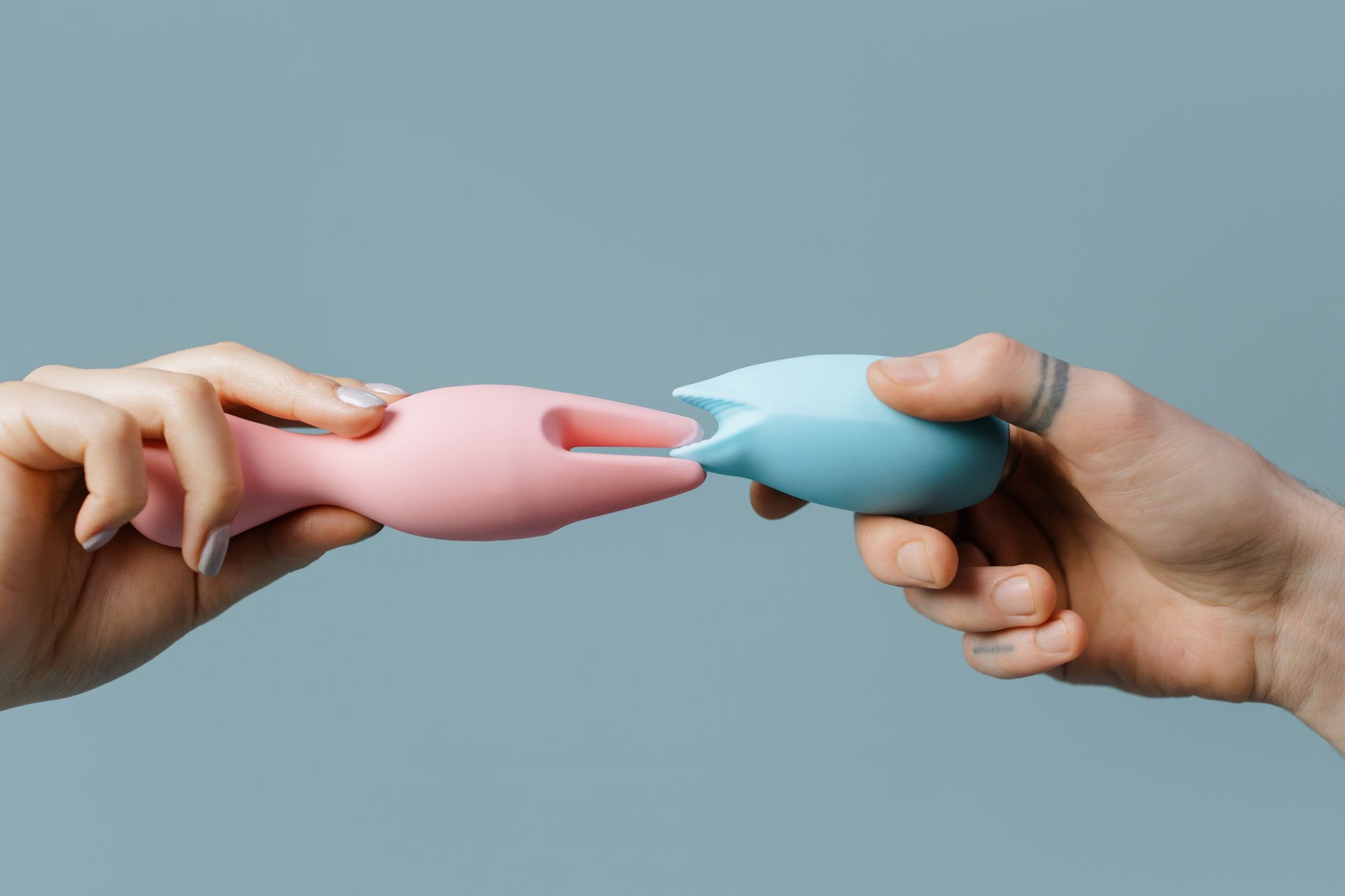
Photo by cottonbro studio on Pexels
Start at the lowest intensity. Most clitoral vibrators have multiple patterns and speeds. Begin at pattern 1 or 2. This does two things. Physically, it lets you acclimate to stimulation without it feeling overwhelming. Psychologically, it signals to yourself that you're taking this slowly, that you're in control, that there's no pressure to escalate. That control is crucial when you're fighting shame.
Talk to yourself differently. This is the part that actually changes the game. If you hear yourself thinking "this is so weird" or "what if someone found out," pause and respond out loud. Not with toxic positivity ("You're amazing and you deserve this"), but with neutrality. "This is normal. My body wants stimulation. That's how bodies work." Boring, factual, shame-proof.
What to expect on your first real attempt
You might feel a surge of shame right before you start. That's your nervous system's threat alarm going off. It doesn't mean you should stop. It means notice it and continue anyway.
You might not feel much physically at first, especially if you're tense. That's normal. Tension blocks sensation. Breathe into your belly instead of your chest. Slow breaths. Your nervous system will interpret that as safe.
You might feel weird combinations of sensations. A lemon vibrator feels nothing like fingers or a partner's touch. It's its own thing. Curiosity serves you better than comparison here.
You might not orgasm. That's also fine. Some people take weeks or months of regular exploration before orgasm arrives. The pathway between shame and pleasure isn't a straight line. It's more like relearning a language you were taught to forget.
When a partner is involved
If you're in a relationship and you're navigating this, separate your solo exploration from partnered sex for at least the first few weeks. Partner sex has different pressure dynamics. Right now, you're building foundational confidence in what feels good to your body alone.
Once that foundation exists, you can gradually integrate a lemon clitoral vibrator into partnered play. But that's a conversation for when you're already comfortable with it solo. People often try to overcome shame with a partner present, and that's actually harder. You're managing two people's feelings instead of just learning your own body.
Moving past the shame spiral
Shame about pleasure is learned. Which means it can be unlearned, usually faster than you'd expect. The pattern typically goes like this.
Week one: awkwardness and self-judgment. Week two: awkwardness starting to fade, curiosity building. Week three: curiosity wins, shame gets quieter. Week four and beyond: shame isn't gone, but it matters less than what your body actually wants.
That shift happens because you're gathering evidence that nothing bad happens. You don't explode. You don't become a different person. You don't deserve punishment. You're just a person learning what pleasure feels like, which is genuinely neutral.
If shame stays intense after four weeks, it might be worth working with a therapist who specializes in sexual shame. Sometimes deeper work is needed, and that's not a failure. It's actually one of the smartest uses of therapy time. Reclaiming pleasure is foundational emotional work, and professionals exist to help with that.
The long game
Using a lemon vibrator when you're fighting self-consciousness isn't about becoming someone who's instantly comfortable with sexuality. It's about slowly gathering evidence that your pleasure matters, that wanting things for yourself is allowed, and that your body's desires don't need permission.
That confidence, built slowly in private, tends to ripple into everything else. You become clearer about what you need. Less apologetic about your wants. More capable of genuine intimacy because you're not performing a version of yourself you think is acceptable.
Start small. Be patient with the awkwardness. Keep going anyway. Your nervous system will catch up to your intentions.